 Flat Roof
Clogged Drains And Torn Drain Flashing
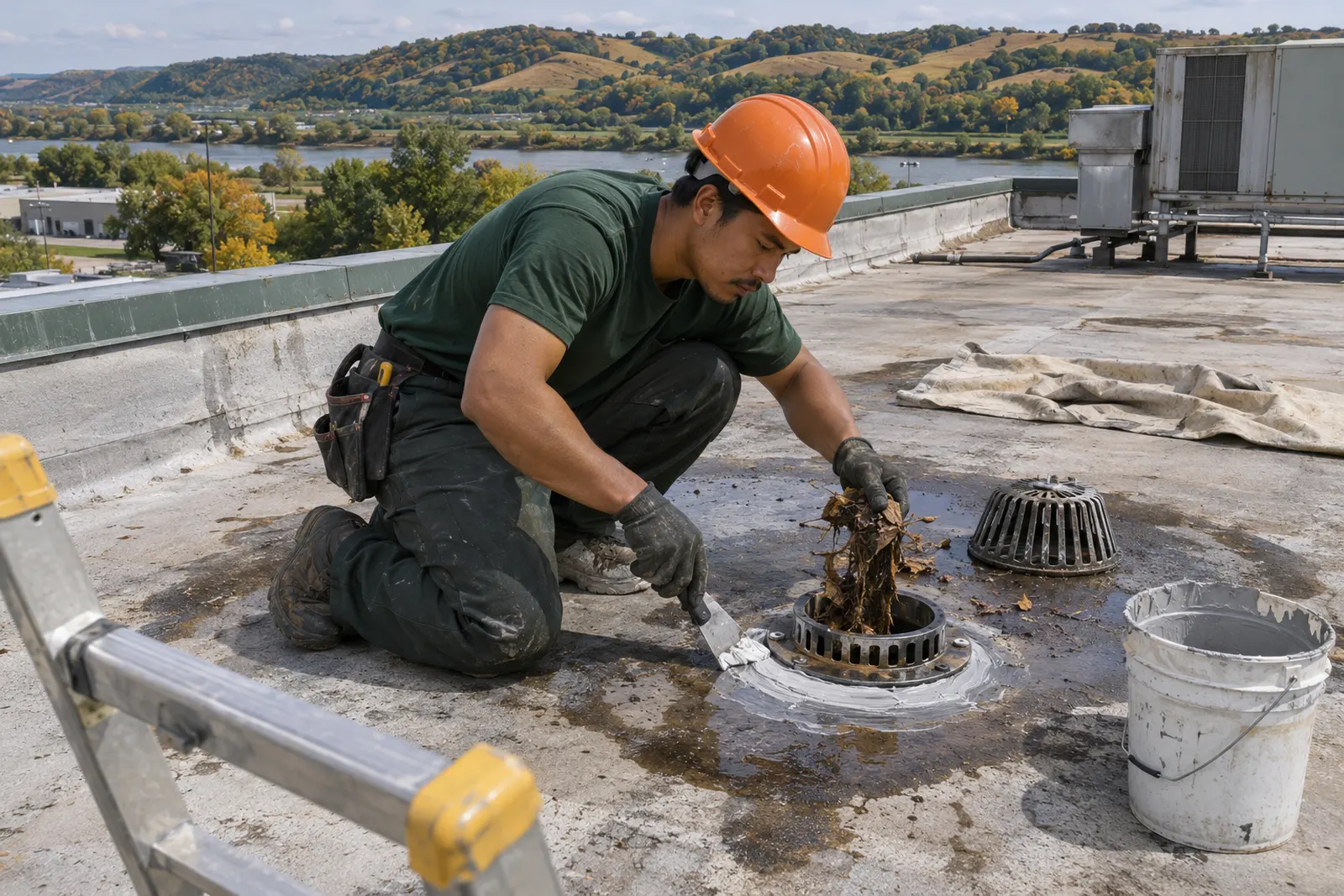
Water rings around a drain bowl mean the strainer clogged or the clamping ring let go. We clear the drain, reset the ring, and flash new membrane into the bowl.
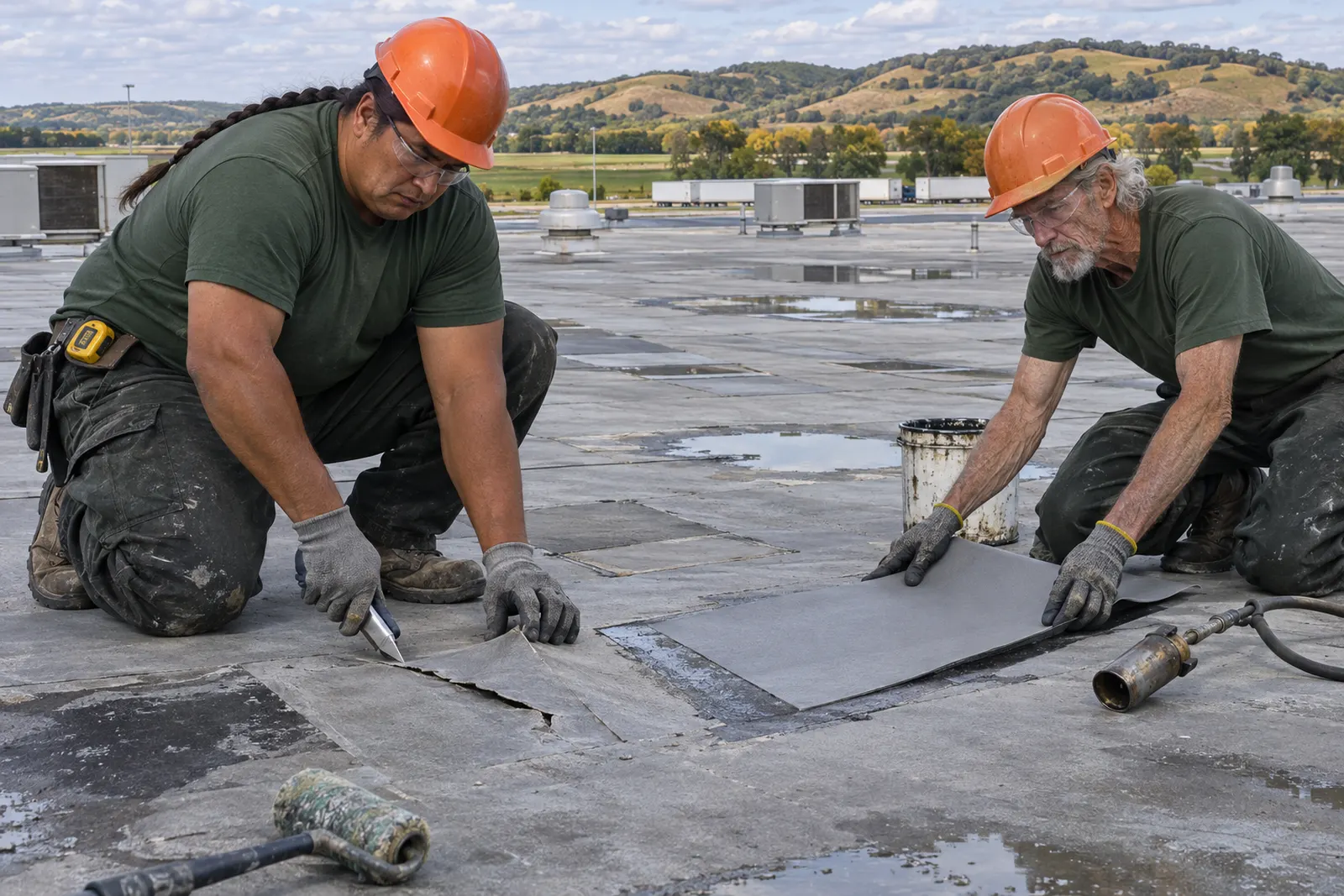
We handle Council Bluffs commercial roof repair for flat, metal, and industrial roofs, tracing each leak to its source and fixing seams, drains, flashings, and fasteners.
Council Bluffs commercial roof repair falls into three paths. Find the column that matches what you see on your roof, then open the service that fits it.
Small, local damage gets a matched patch: one open seam, a cracked pitch pan, a few backed-out screws, or a torn drain flashing.
Larger damage means cutting out wet insulation, rebuilding flashing around a curb, or replacing rusted panels across one bay of the roof.
When leaks run across many tenant spaces or most of the insulation is wet, we say so, stop the water now, and list what a replacement would involve.
Four conditions bring most building owners to us. Each card names what you see and the repair that follows.
Flat RoofWater rings around a drain bowl mean the strainer clogged or the clamping ring let go. We clear the drain, reset the ring, and flash new membrane into the bowl.
 Metal Roof
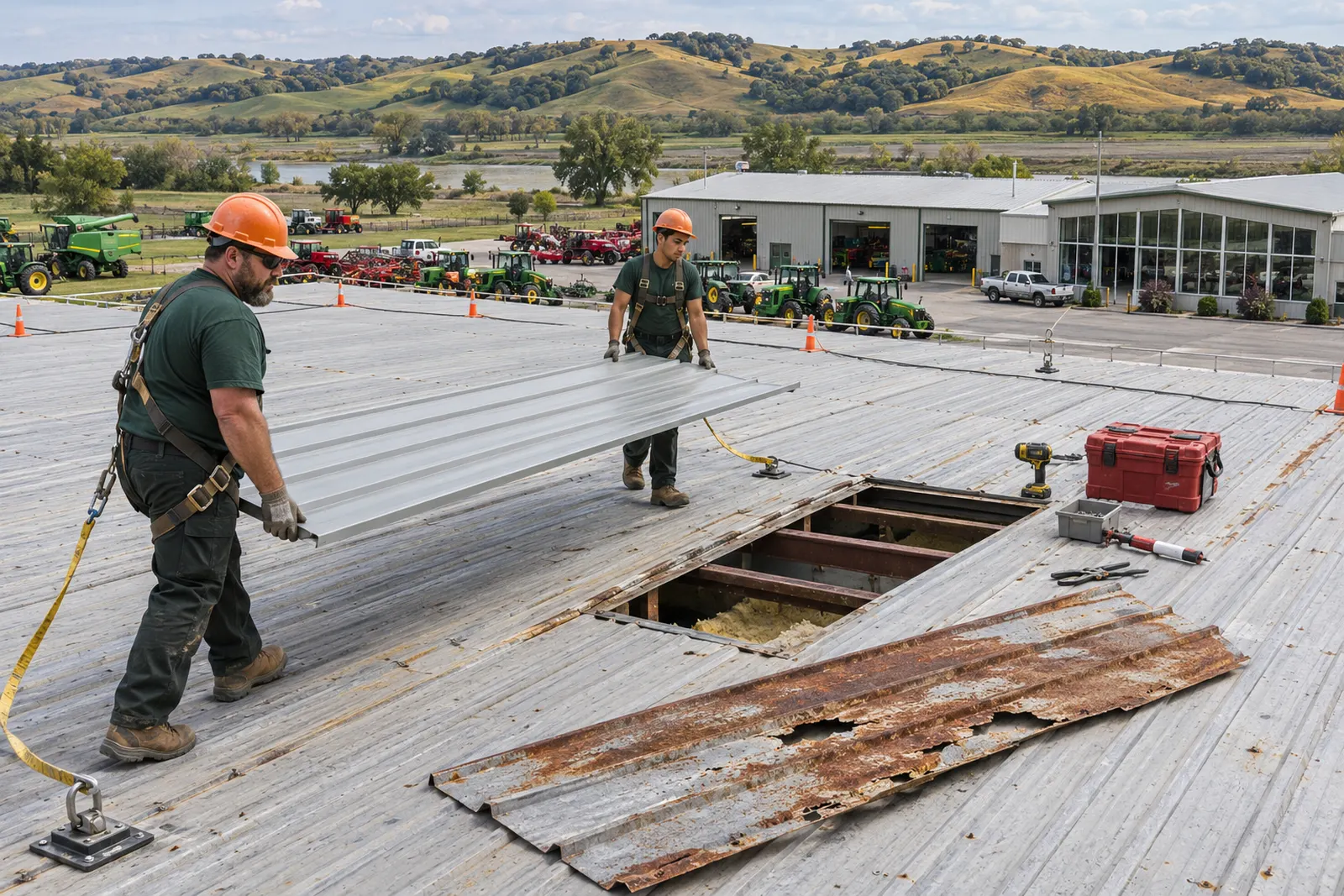
Rust that eats through a panel near a vent or gutter line lets water straight in. We lift out the bad panel, match its profile, and fasten a new one with fresh lap sealant.
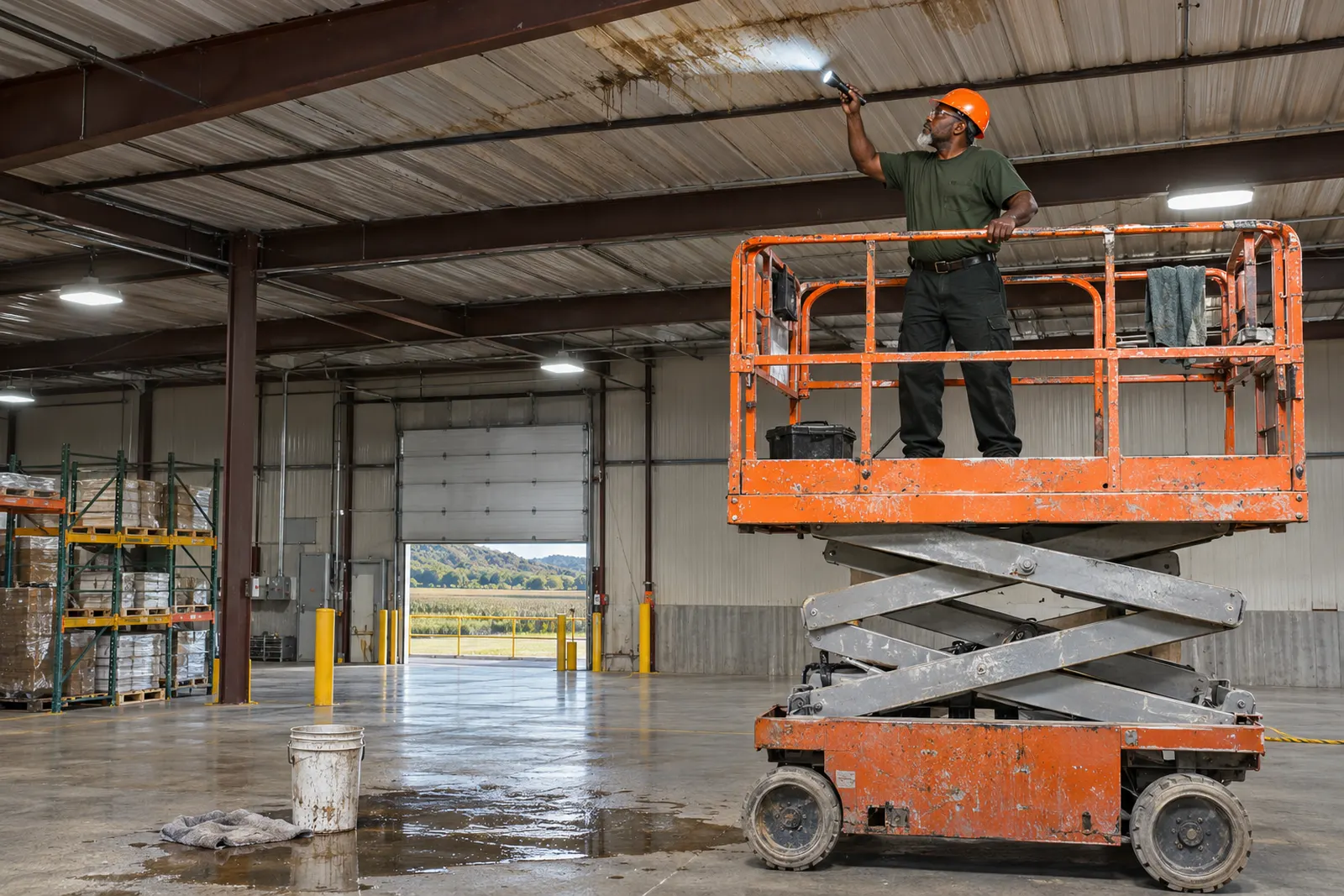 Inside The Building
A stain on the deck or ceiling tile marks where water lands, which is often several feet from where it enters. We trace it from a lift below, then confirm the opening on the roof.
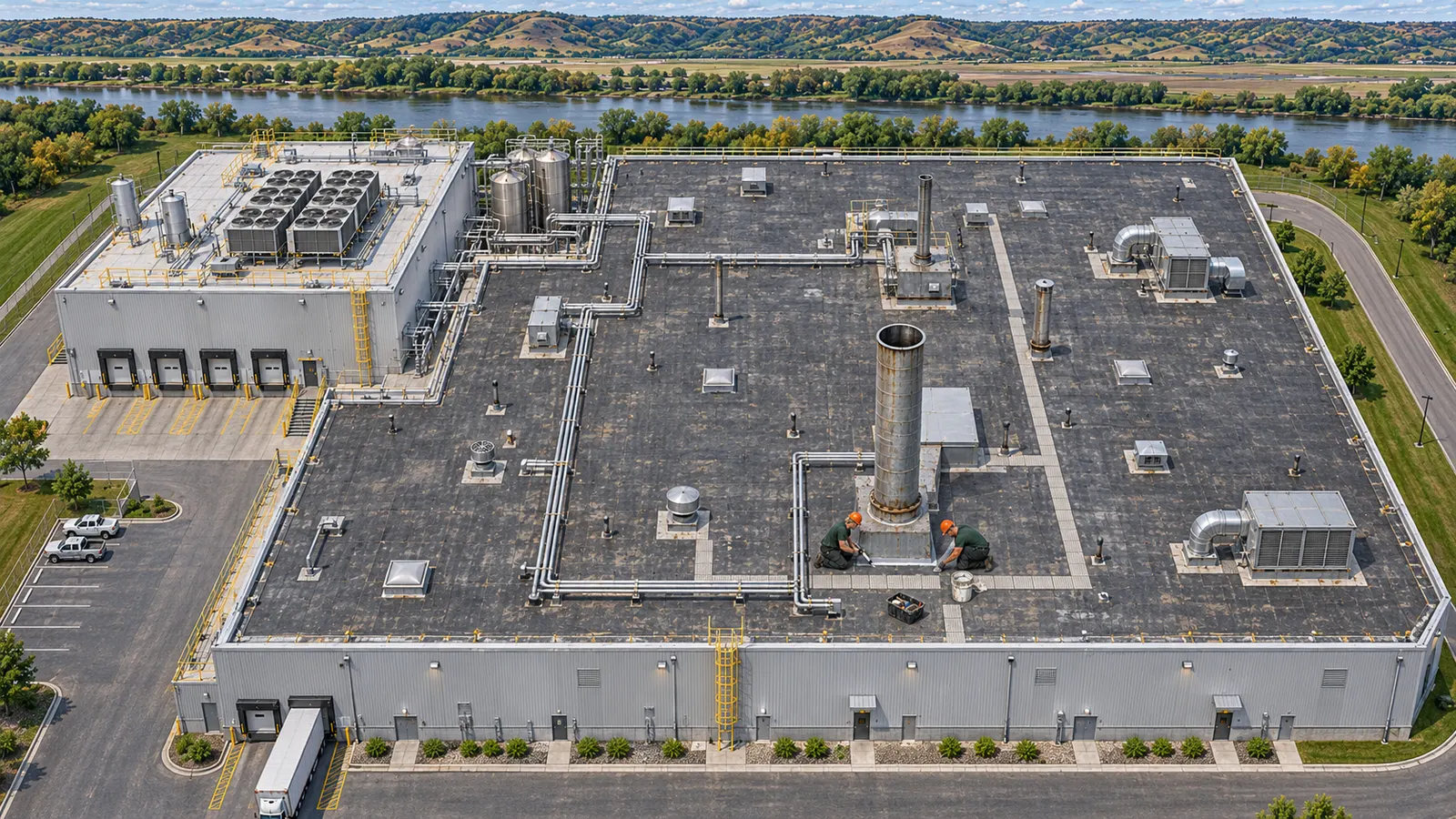 Plant Roof
Fans and process vents shake their curb flashing loose, and exhaust residue softens some membranes. We strip the old flashing, rebuild the curb wrap, and replace the damaged membrane around it.
Match your roof to a starting point. One card points past repair, because some roofs need more than a patch.
Membrane roofs on warehouses, strip retail, and offices fail first at drains, seams, and wall flashing.
Shops, dealer buildings, and storage sheds leak where washers crack and screws back out with heat and cold.
Stains in a warehouse or office get traced from inside and above before any patch goes down.
Core cuts that come up wet across large sections point past spot repair toward recovering or replacing the roof.
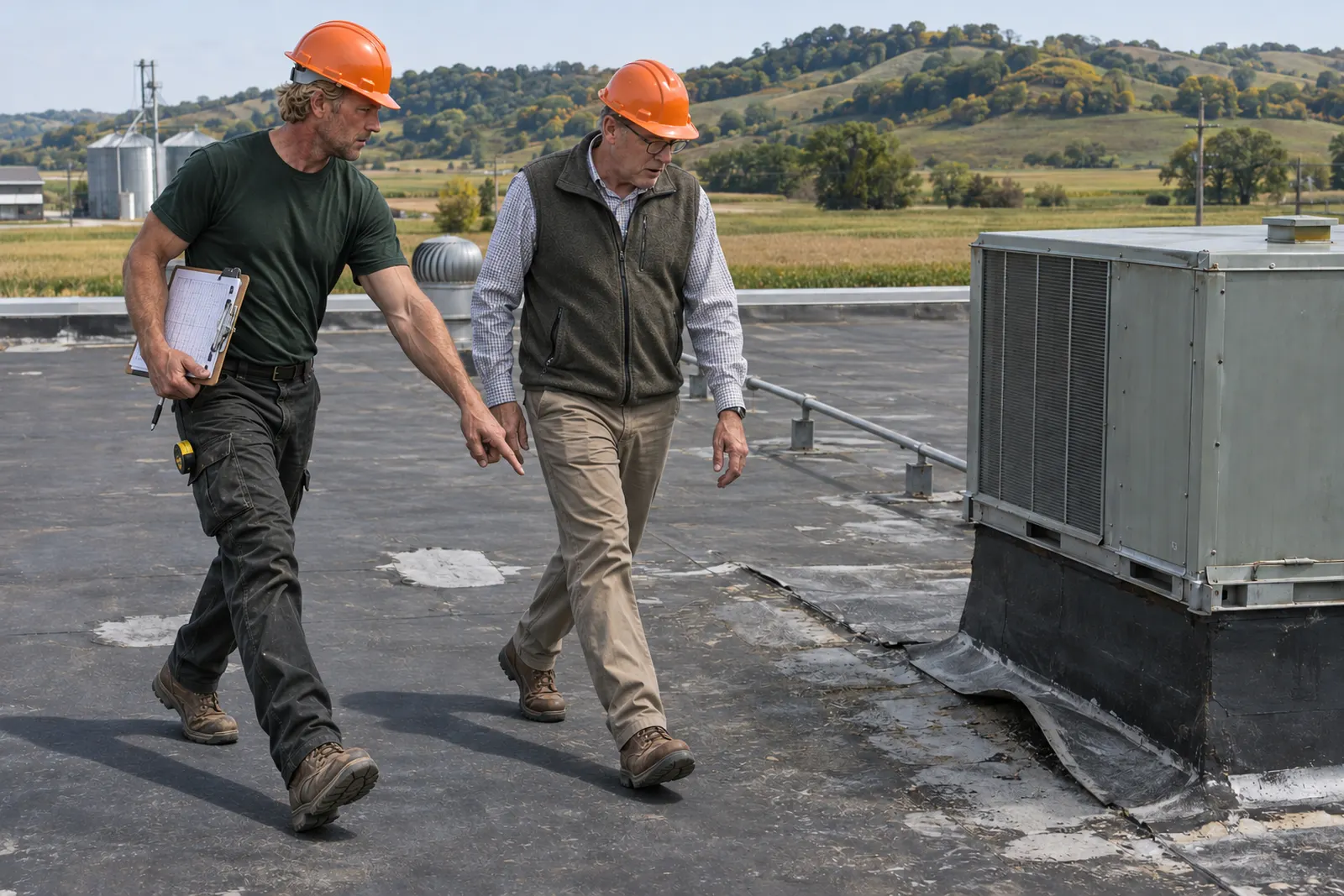
Call and tell us where the water lands. We put a temporary seal on the opening to stop it, then plan the permanent repair once the roof is dry.
Call UsFour steps take a leak from the first call to a finished repair. You see the findings before any work is priced.
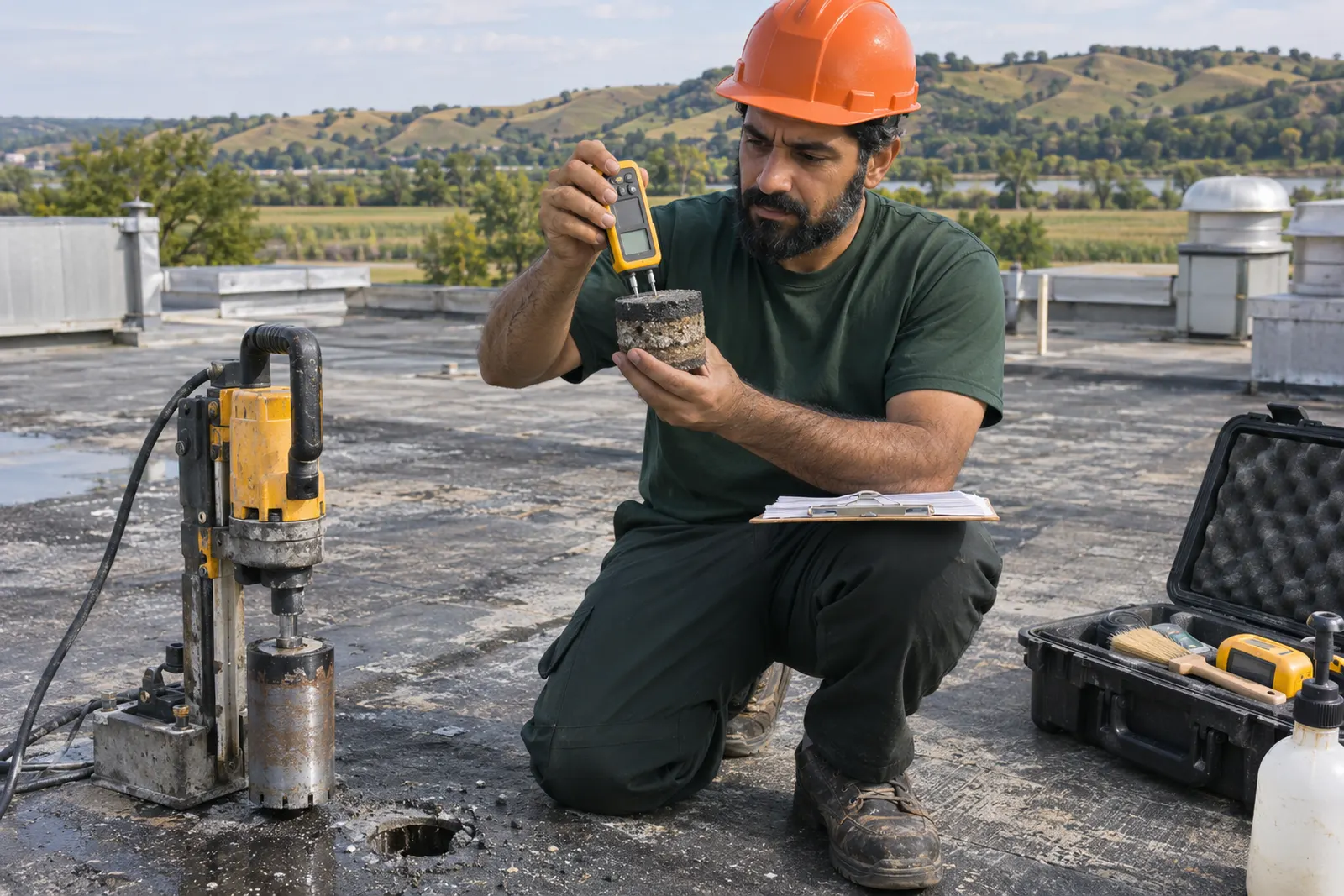
We ask where water shows up, when it started, and whether wind or heavy rain makes it worse. That record narrows the roof areas to check first.
On the roof we check seams, drains, flashings, curbs, and fasteners. A core cut and moisture meter show whether the insulation under the leak is wet or dry.
Each finding comes back with a photo, the repair it needs, and whether it can wait. You approve the price before any membrane or panel is cut.
Crews make the repairs in the agreed order, protect equipment below, and water-test the seams and flashings where the leak started before leaving the roof.
Fixing a leak early keeps the damage small. These are the gains owners see when a repair goes in before water spreads.
Insulation that stays dry keeps its value and spares you from cutting out soaked boards under the membrane later.
Racks, machinery, and ceiling tile below a sealed roof stay out of the drip line.
Standing water on a steel deck starts corrosion that turns a seam patch into a deck repair.
Planned roof repairs fit around shifts and deliveries instead of happening in the middle of a storm.
We repair commercial roofs in Council Bluffs, Glenwood, Carter Lake, Missouri Valley, Avoca, and Logan.
Outside these towns? Call us or send us a message.
Brick storefronts and offices near the Mills County courthouse, where roof access runs through tight alleys and shared walls.
Low, flat commercial lots west of the Missouri River, where drains and ponding decide most repairs.
Shops and warehouses in Harrison County's largest city, with roof repairs timed around freeze, thaw, and spring storms.
Metal shop and farm-service buildings, where screw washers, panel laps, and ridge caps cause most leaks.
Offices and shops in the Harrison County seat, where a clear record of past leaks guides each repair.
Short answers to what owners ask before the first inspection.
Emergency work covers water coming in over stock or equipment, membrane torn open in a storm, and metal panels lifted by wind. We start by sealing the opening so no more water enters. Once the roof dries out, we map how far the damage reaches and make the permanent repair.
We start below the drip, since that spot shows where the water finally fell, then walk the roof above it. Open seams, failed flashings, cracked pitch pans, and clogged drains are the usual entry points. Water can run under the membrane for several feet, so we follow it back to the real opening before patching.
We check the membrane or panels, every seam and flashing, the drains, edge metal, and the curbs under rooftop equipment. Ponding, punctures, loose fasteners, and wet insulation all go on the list. You get photos and a written list that separates repairs needed now from items that can wait until spring or fall.
Three things set the price: the roof system, how much of it is damaged, and how hard it is to reach. Cutting out wet insulation, rebuilding flashing, and fixing drains add labor and material. Work done after hours or during an emergency also changes the number. After the inspection, every item is listed with its own price.
Most cold storage leaks show up at curbs, refrigeration line penetrations, and insulation damaged by condensation. Membrane roofs get flat roof repair and panel roofs get metal roof repair. Some cold storage water comes from condensation inside the building, so we check the vapor control and insulation before any patch goes on.
Tell us what the roof is doing and where the water shows up. We inspect it, show you the findings, and price the repair.