 Membrane Field
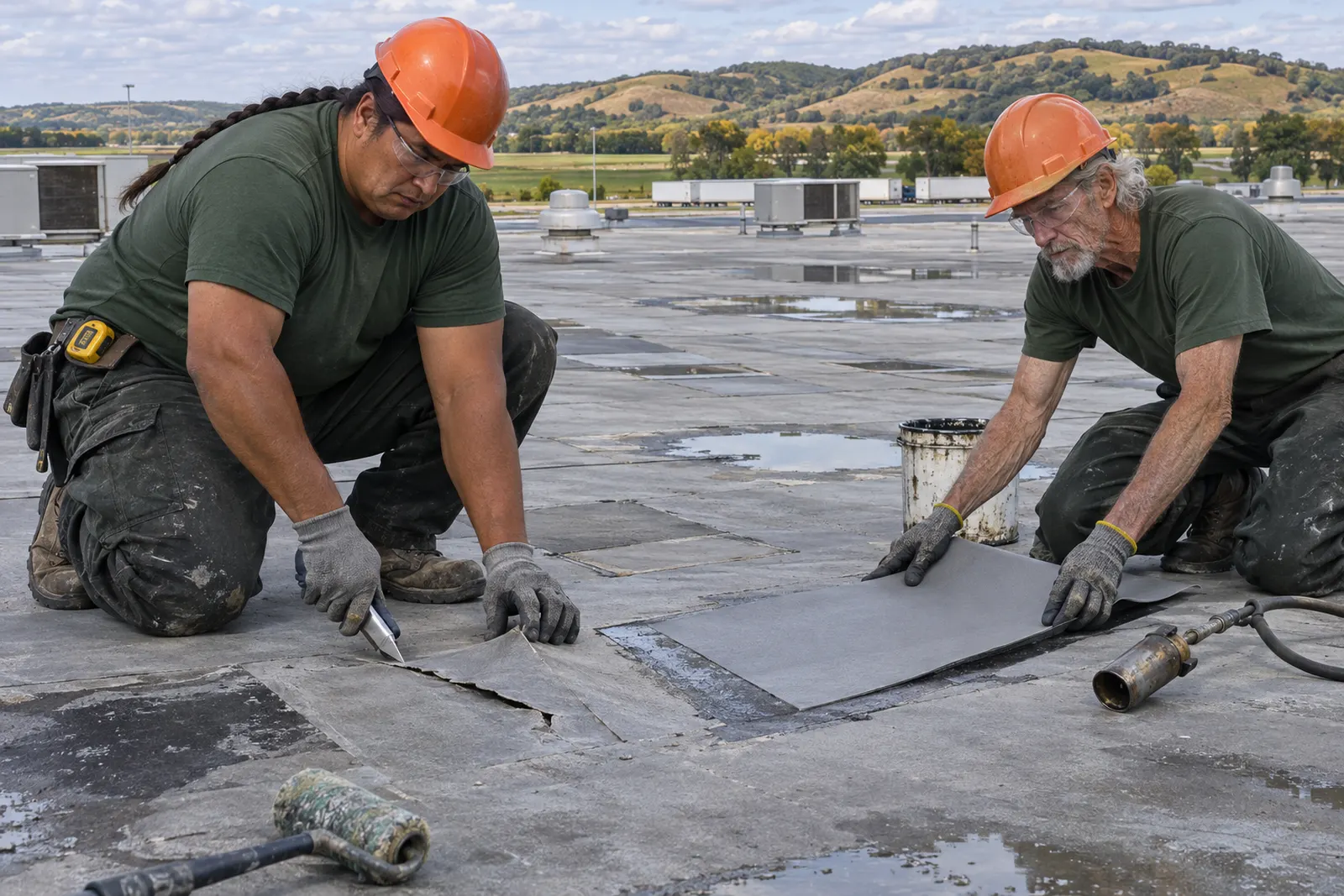
Punctures And Split Seams
Dropped tools, foot traffic, and shrinking membrane open the field and its seams. We cut out the damaged piece and weld or tape a patch that laps well past it.

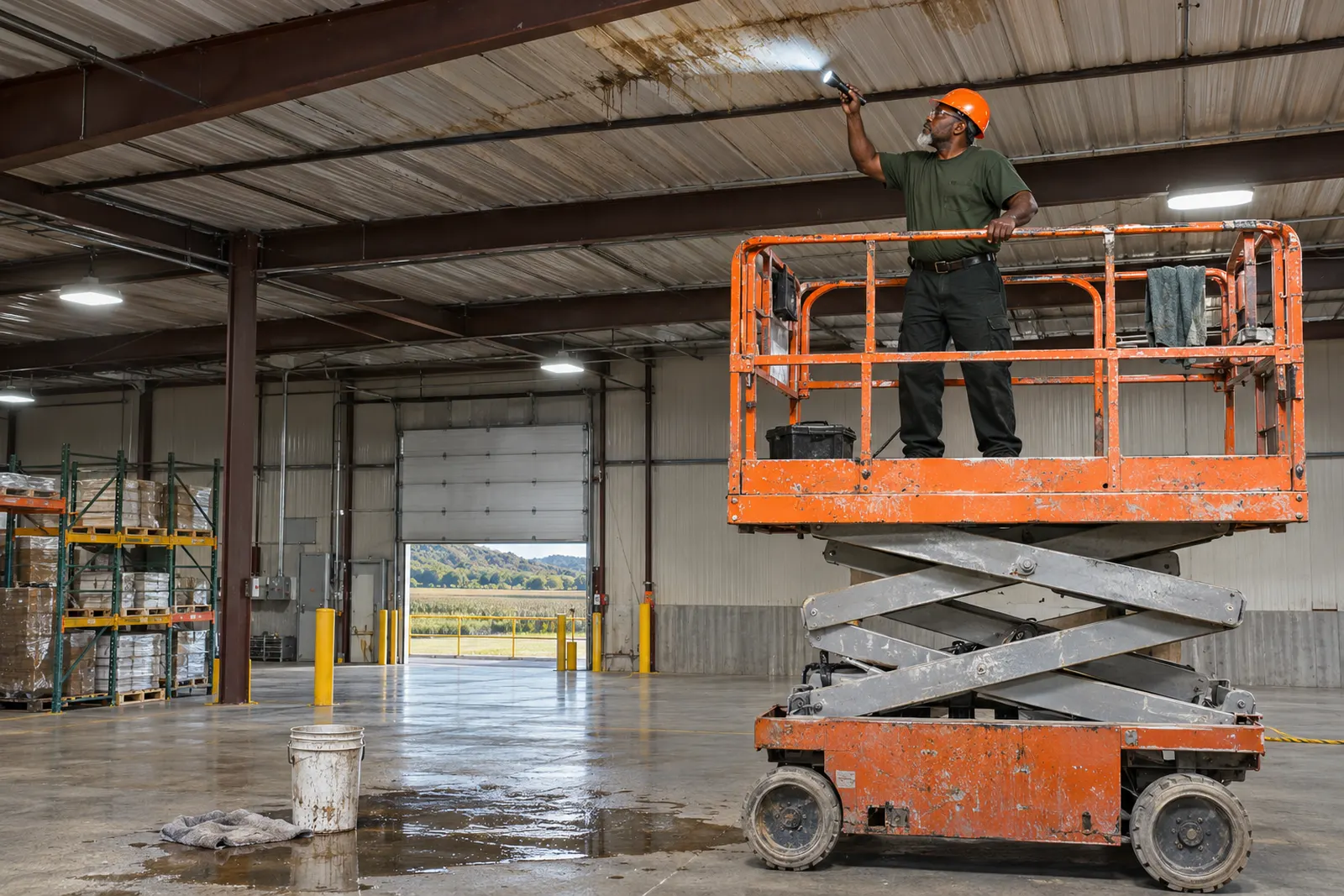
As a Council Bluffs commercial roof leak repair contractor, we trace water from the stain inside to the opening on the roof, then seal it and repair what got wet.
Council Bluffs commercial roof leak repair starts with what you see inside the building. Pick the case closest to yours.
A steady drip that returns in one place usually traces to a single seam, boot, or pitch pan above it.
Water that appears only with strong wind points to edge metal, wall flashing, or coping joints along the roof edge.
Hail cracks membranes, bruises insulation, and splits seams, so the whole roof gets checked and every impact gets recorded.
Stains spread over many tenant spaces or bays point to wet insulation across the roof and a bigger repair.
Water rarely enters where it drips. These four sources account for most of the leaks we trace in commercial buildings.
Membrane FieldDropped tools, foot traffic, and shrinking membrane open the field and its seams. We cut out the damaged piece and weld or tape a patch that laps well past it.
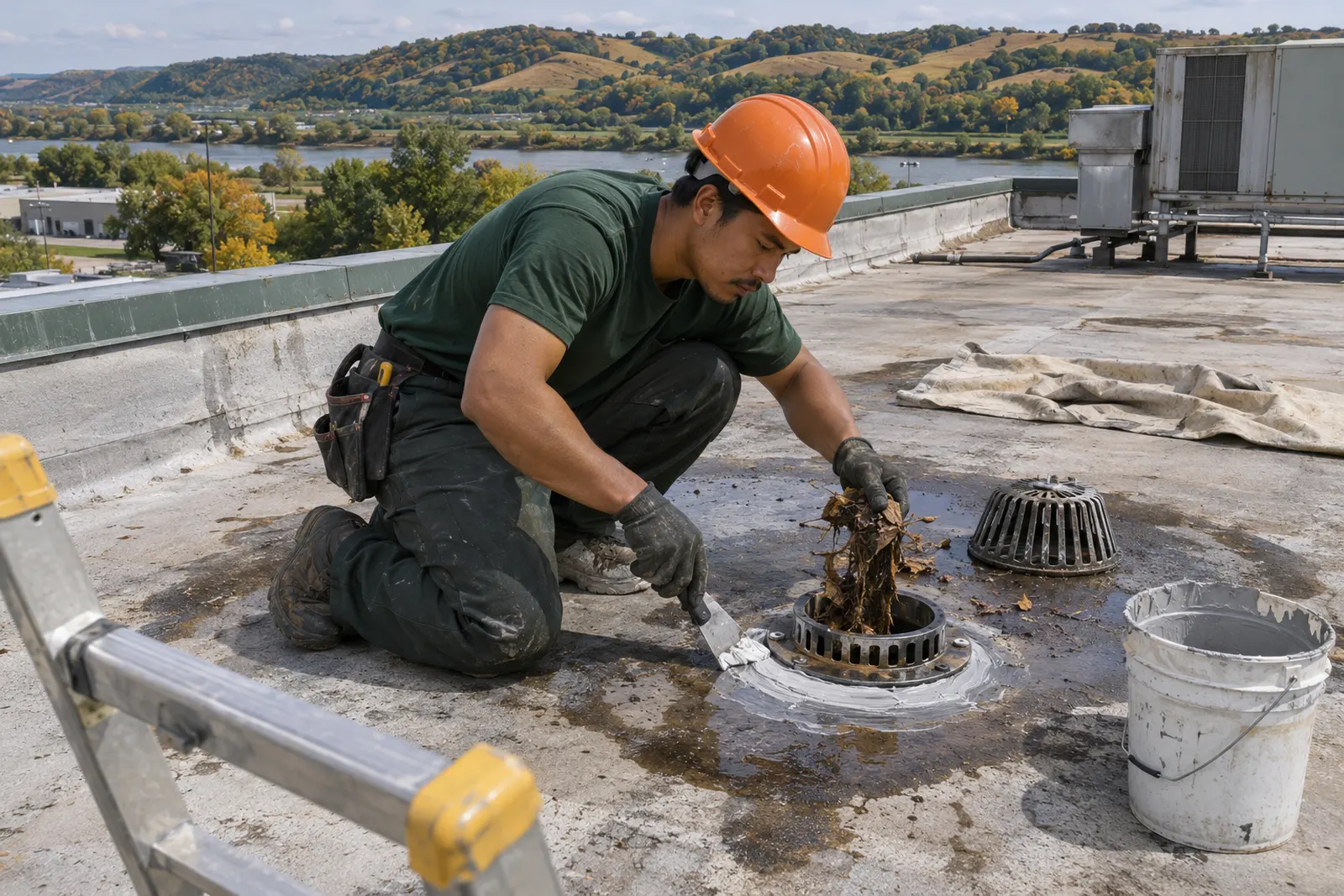 Drains
Clamping rings loosen and membrane tears at the bowl, so water drops straight down the drain line. We reset the ring and flash new membrane into the bowl.
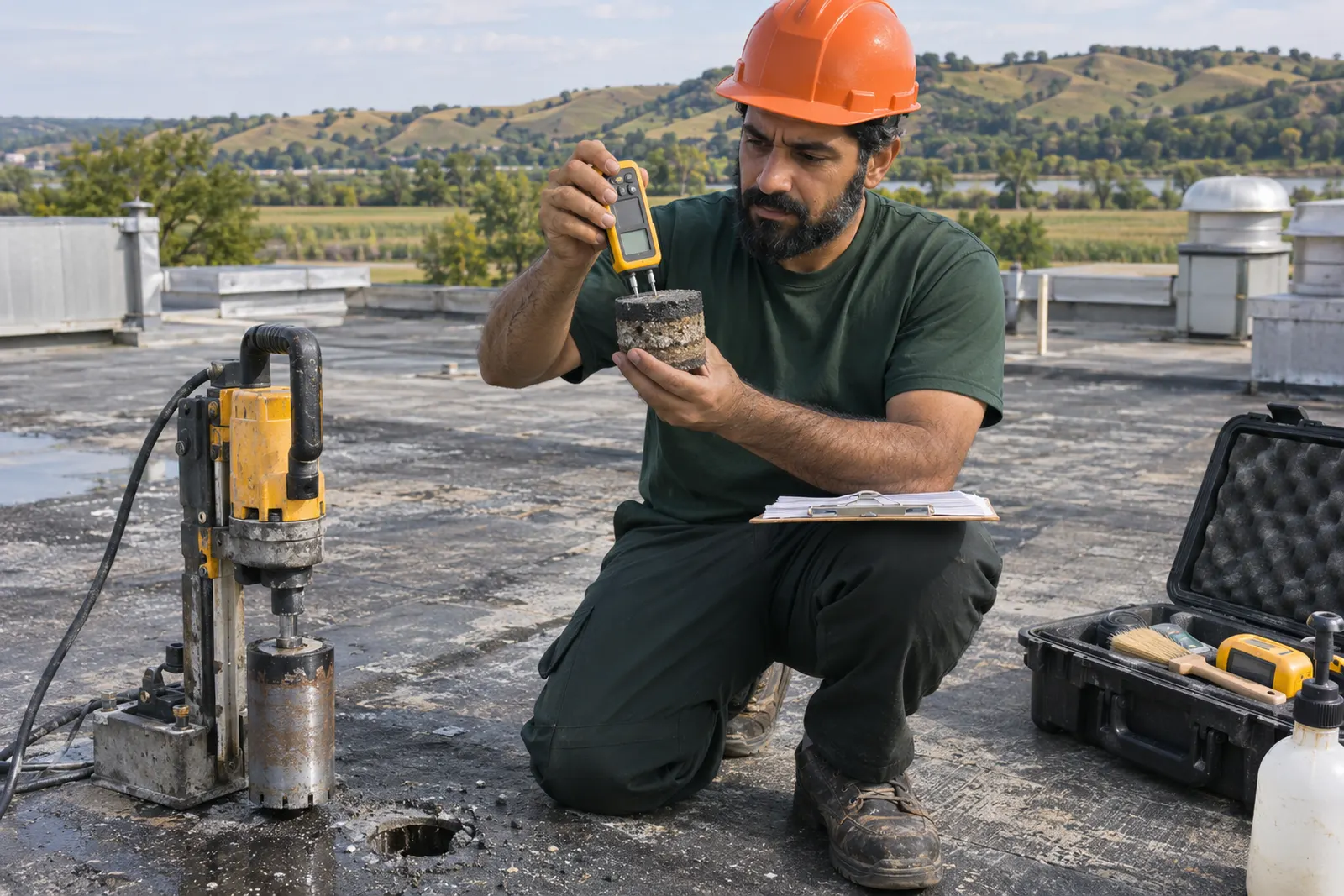 After Hail
Hail bruises the insulation and cracks the membrane even when the surface looks fine. Core cuts at the impacts show how far the damage goes.
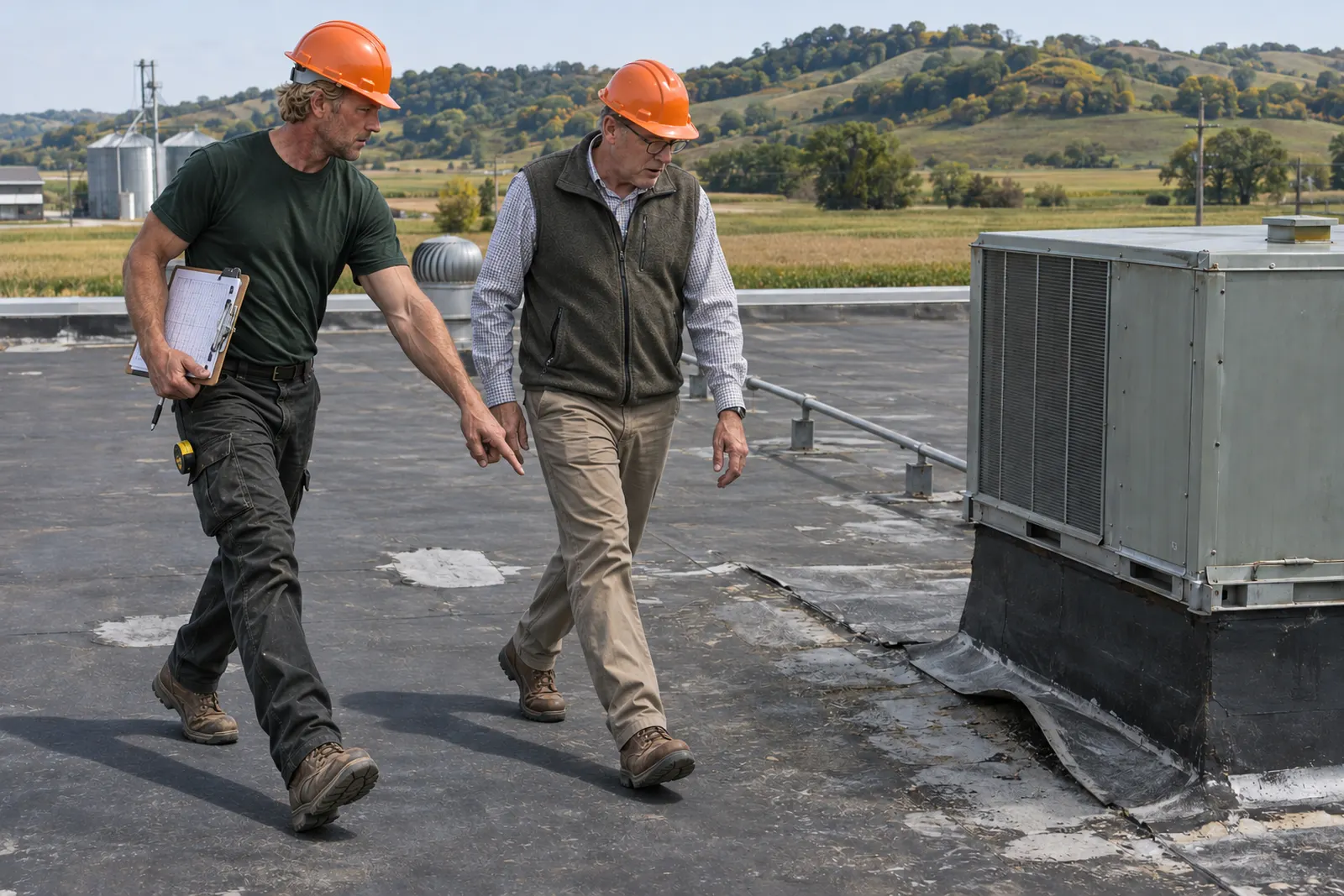 Rooftop Units
Service traffic around rooftop units scuffs the membrane and opens seams beside the curb. We patch the worn area and add walk pads along the service path.
How a leak gets fixed depends on where it enters and how far the water spread. Each method below matches one case.
Mark every drip and stain inside, then match them to roof features above using deck lines, columns, and curbs.
When It FitsStains with no obvious source above.
Scan the roof for wet insulation after sundown, or run water over one area at a time until the leak shows inside.
When It FitsLarge warehouses where water travels under the membrane.
Stop active water with a temporary seal, let the area dry, then cut out wet material and rebuild the roof layers.
When It FitsWater coming in over stock or equipment now.
Repoint mortar cracks, reset counterflashing, and seal coping joints before repairing the membrane at the wall.
When It FitsLeaks at parapets, bell towers, or wall joints.
Every rain that gets in spreads the damage further. Sealing the opening early protects more than the roof.
Pallets and rack contents under the drip stay dry once the opening above is sealed.
Lights, panels, and machinery stay clear of water running along the deck and conduit.
Office ceilings, walls, and floors avoid the stains and mold that follow a slow, repeated leak.
Boards around the opening stay dry, so the repair stays small instead of growing with each storm.
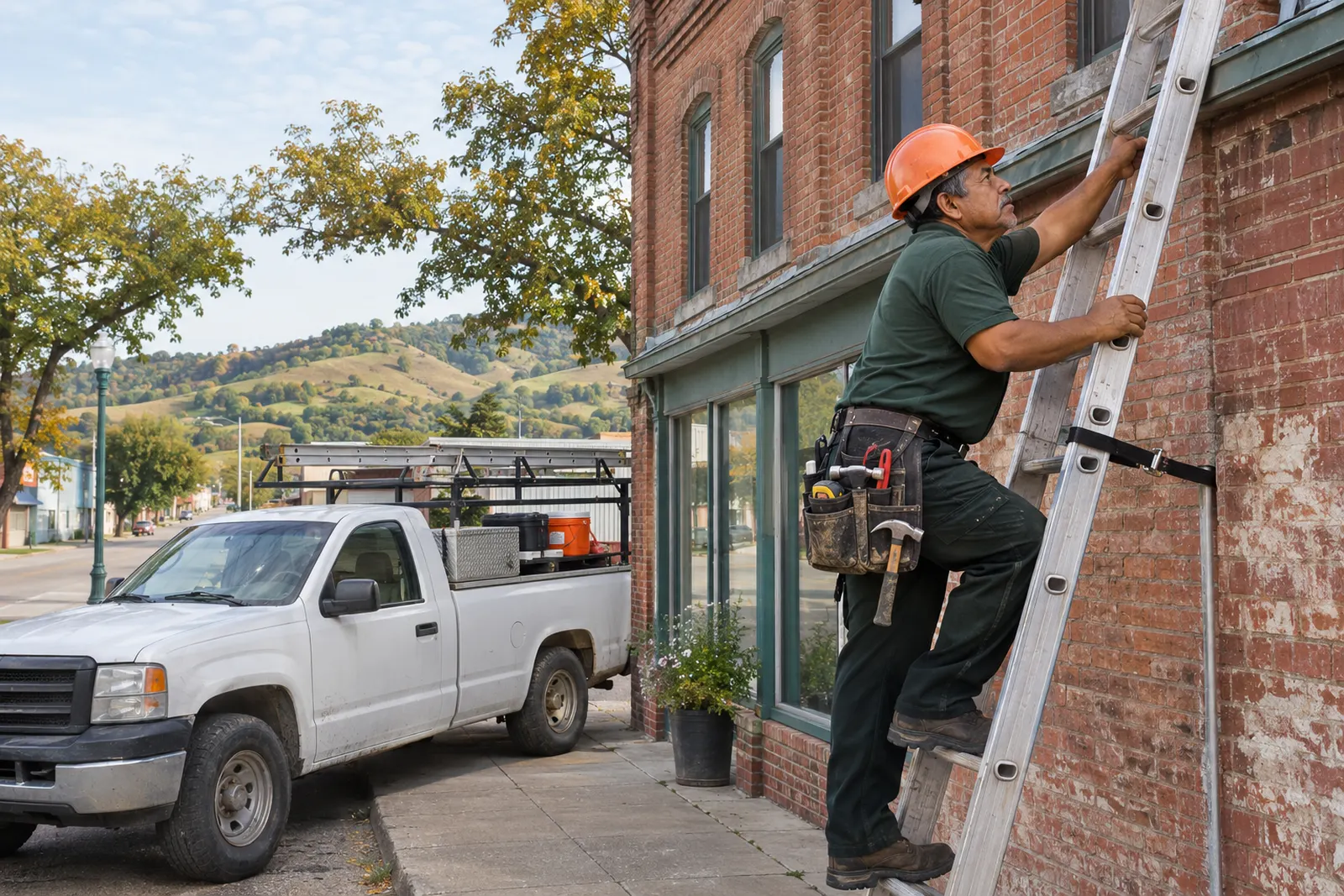
Call and tell us where it drips and when it started. We seal the opening first and plan the permanent repair once the roof is dry.
Call UsLeak repair works from the inside out, so the patch goes where the water actually enters.
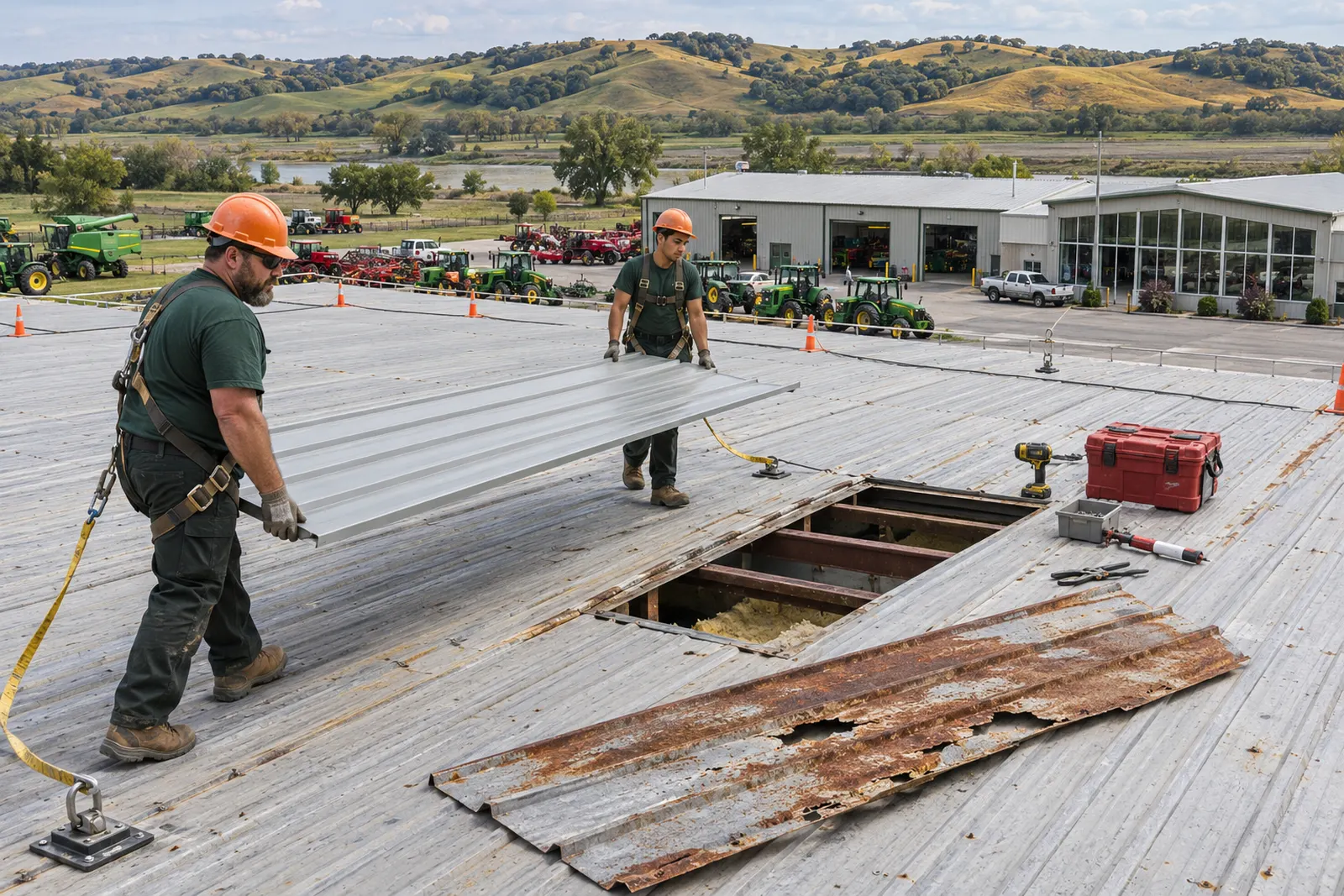
We map every drip and stain from below, using a lift where the deck is high, and note whether wind or heavy rain sets each one off.
Above the marks we check seams, boots, pitch pans, curbs, and drains, and run water tests one area at a time where the source hides.
The opening gets a matched repair, and any wet insulation around it gets cut out and replaced before new membrane goes over it.
After the next rain or a hose test, we check the interior marks again and send photos of the repaired opening.
Once the opening is found, the fix sometimes belongs to one of these services.
Membrane seams, drains, and ponding found while tracing get fixed under flat roof repair.
See Flat Roof RepairLeaks traced to screw lines, laps, or ridge caps move to metal roof repair.
See Metal Roof RepairProcess vents and exhaust curbs on plant roofs need flashing built for heat and residue.
See Industrial Roof RepairAnswers about hail, heavy rain, permits, and finding leaks.
Protect the interior first, photograph the damage, and get the roof inspected. The City of Council Bluffs roofing guide places the city in a moderate hail exposure area, and hail can crack membranes, bruise insulation, and split seams. We seal the active leak and record every impact we find on the roof.
Two things drive the price: how hard the leak is to find and how far the water spread. A failed pitch pan is a small repair. A leak that soaked insulation across a wide area means cutting out and replacing the wet material, and access and roof type add to the total.
A roof that leaks only in heavy rain still has a defect to repair. Heavy rain reaches weak seams, clogged drains, and flashings that a light shower misses. When leaks appear only with wind-driven rain, edge metal or wall flashing is the usual cause, and we water-test those areas to confirm it.
We map every drip point inside the warehouse first, then inspect the roof above for open seams, failed fasteners, and damaged curb flashing. On large warehouses, water often travels under the membrane, so an infrared scan or a water test can be needed to find where it enters.
It depends on the scope of work. Council Bluffs lists the 2018 International Existing Building Code, as amended by the State of Iowa, for work on existing buildings. A small patch and a larger roof recover are treated differently, so we confirm what applies with the Council Bluffs Building Division first.
Bell towers and parapets join masonry, metal flashing, and roofing at one joint, so they leak first. Cracked mortar, failed counterflashing, and open coping joints let water behind the roofing. We repoint where needed, reset the counterflashing, and seal the coping before the membrane at the wall is repaired.
Tell us where the water shows up inside. We trace it to the roof, seal it, and send a written price for the full repair.