 Insulation
Wet Insulation Under Ponds
Water that sits for days works through small seam gaps into the insulation. A core cut under the pond shows how far it spread, and the wet boards come out before new membrane goes down.

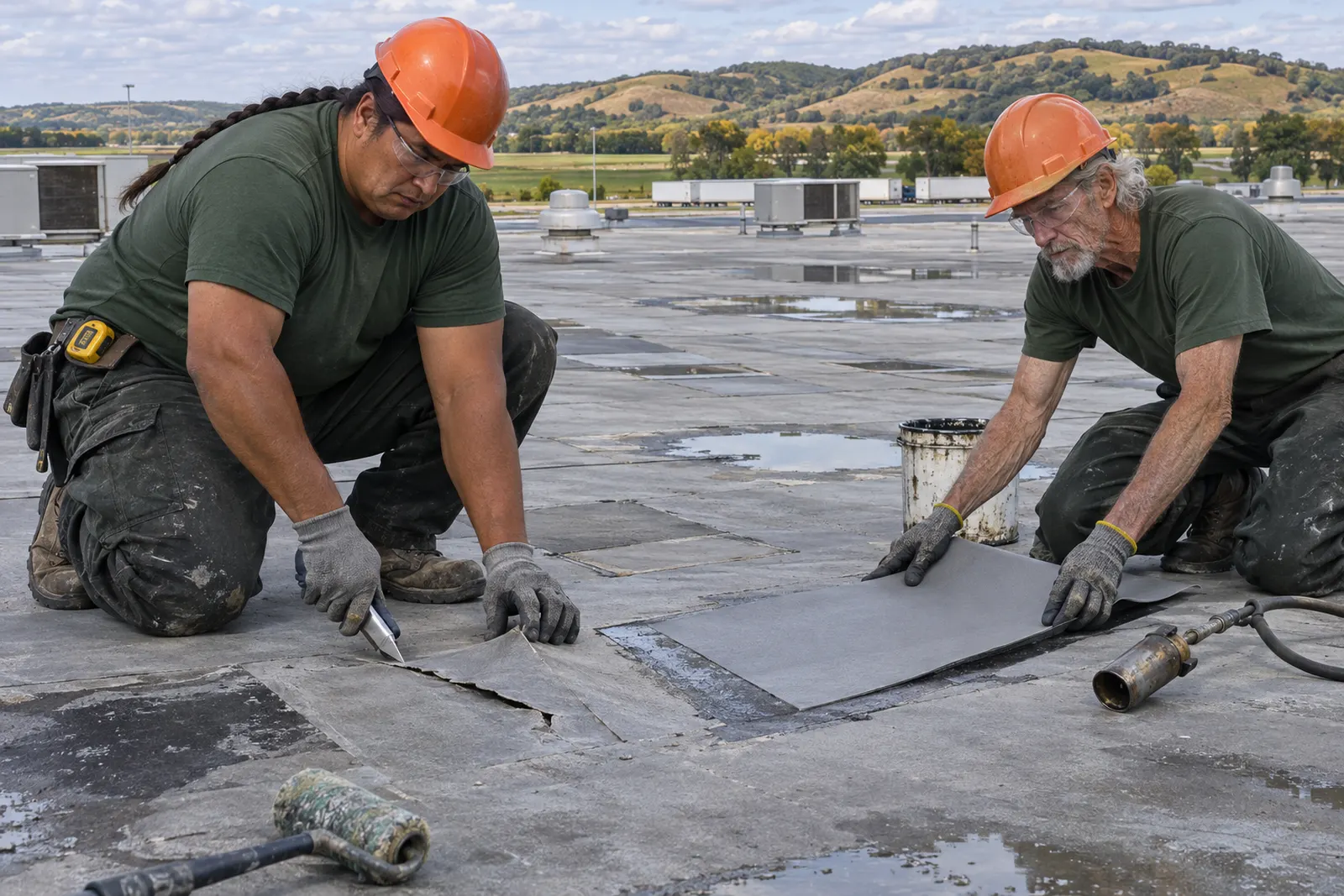
We handle Carter Lake commercial roof repair on low, flat roofs, clearing and reflashing drains, fixing ponding, and resealing seams that sit in standing water.
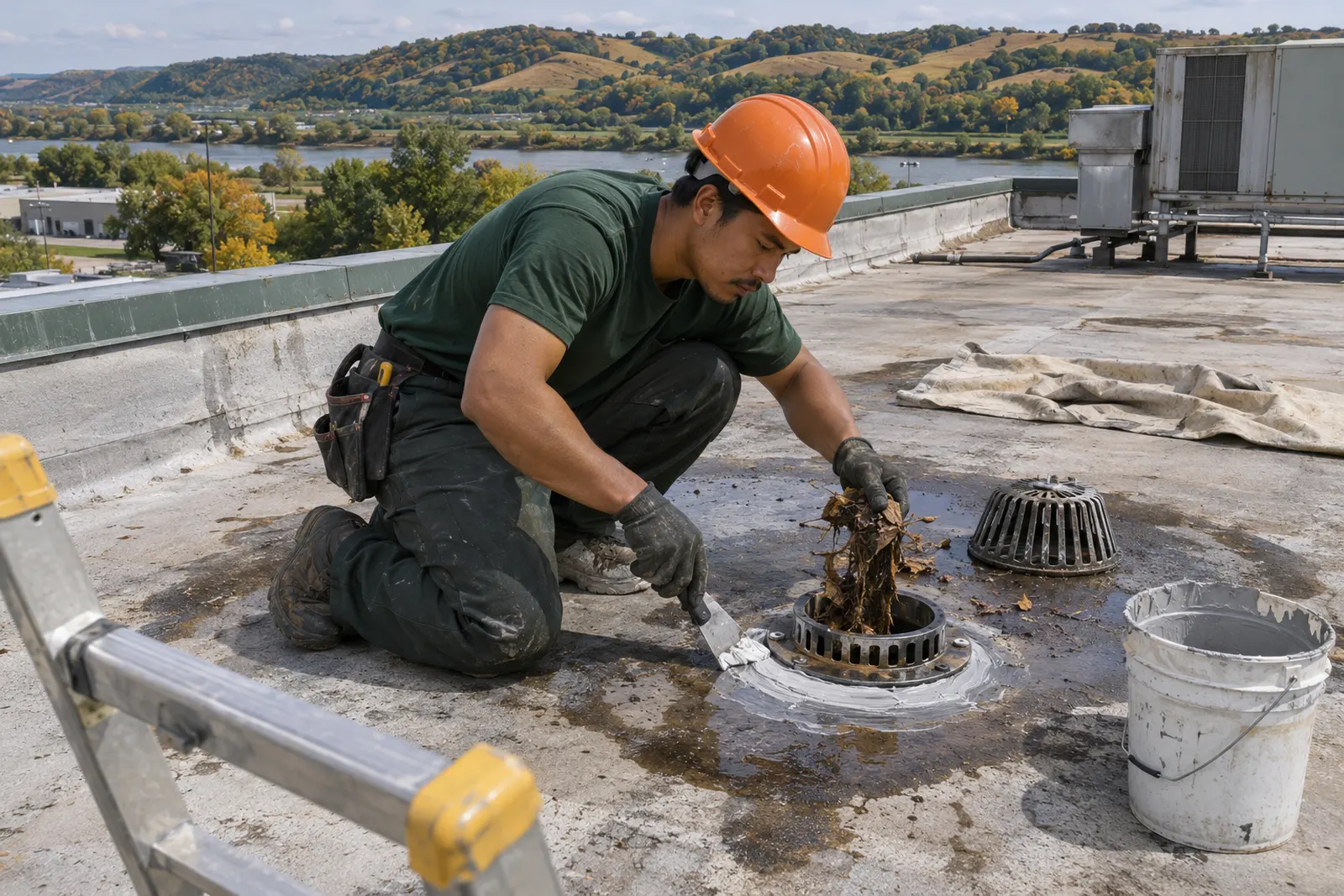
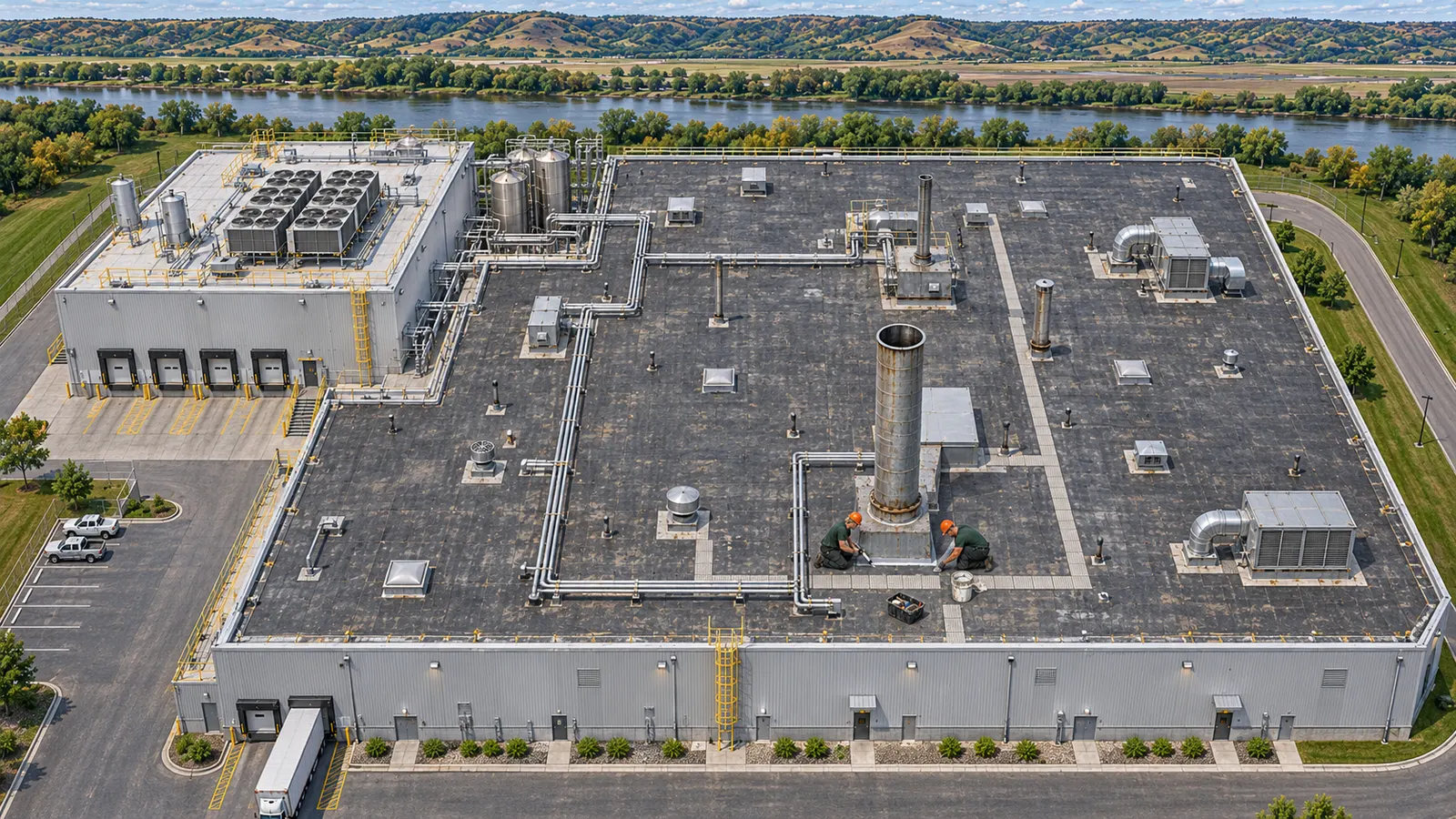
Carter Lake commercial roof repair usually starts at the drains. The city sits west of the Missouri River, bordered by Omaha on three sides, and many of its commercial buildings have long, low roofs with little slope.
On a roof that flat, one clogged strainer or sagging deck section holds water against the seams for days. We find where water stands and why it stays, then fix the drainage along with the leak. Most repairs here pair a seam or drain fix with a drainage change.
Low roofs fail in a pattern. These four conditions come up most on Carter Lake buildings.
InsulationWater that sits for days works through small seam gaps into the insulation. A core cut under the pond shows how far it spread, and the wet boards come out before new membrane goes down.
 Seams
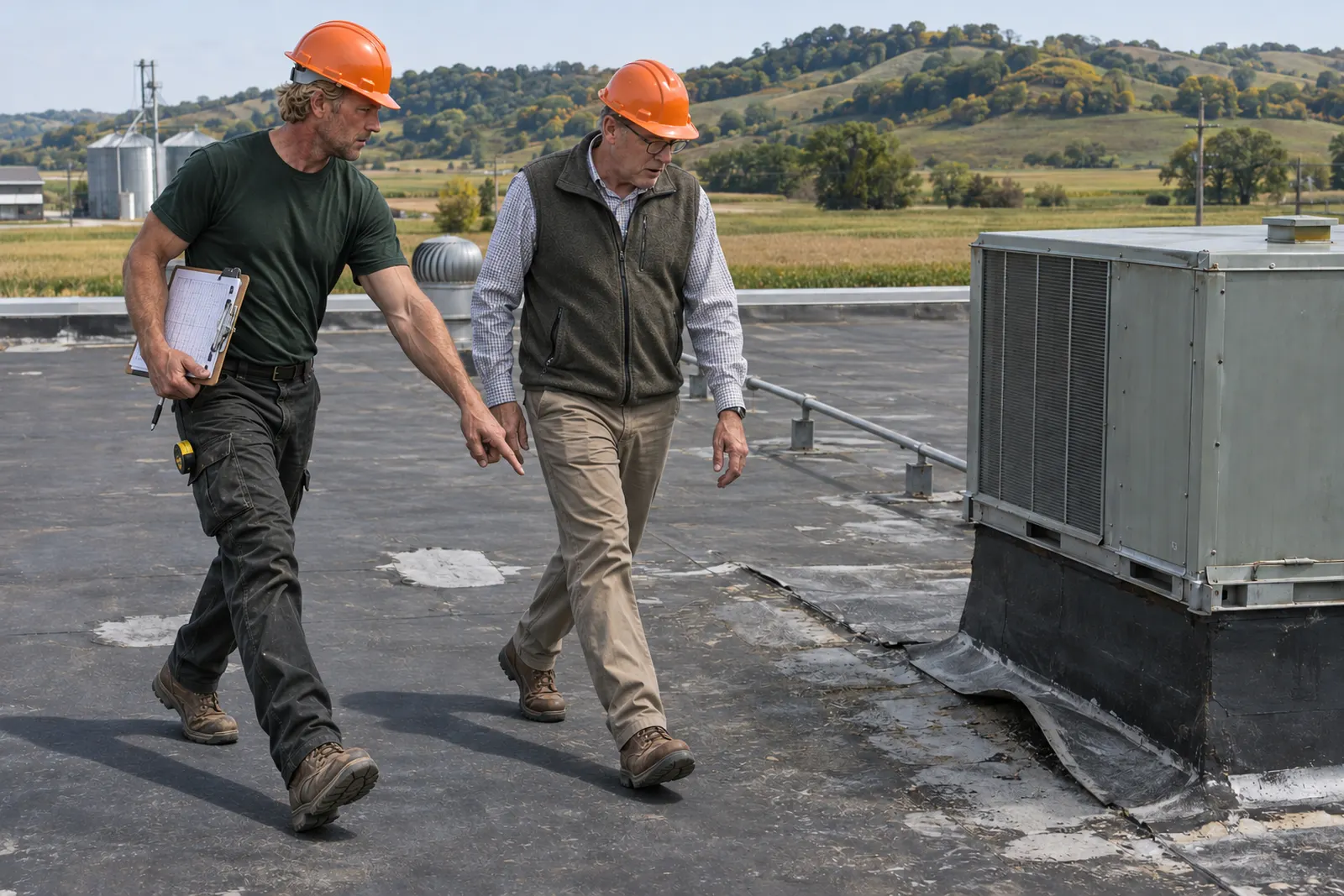
Seams that spend days underwater lose their bond first. We probe every seam inside the ponding ring and weld or tape the ones that have opened.
 Inside
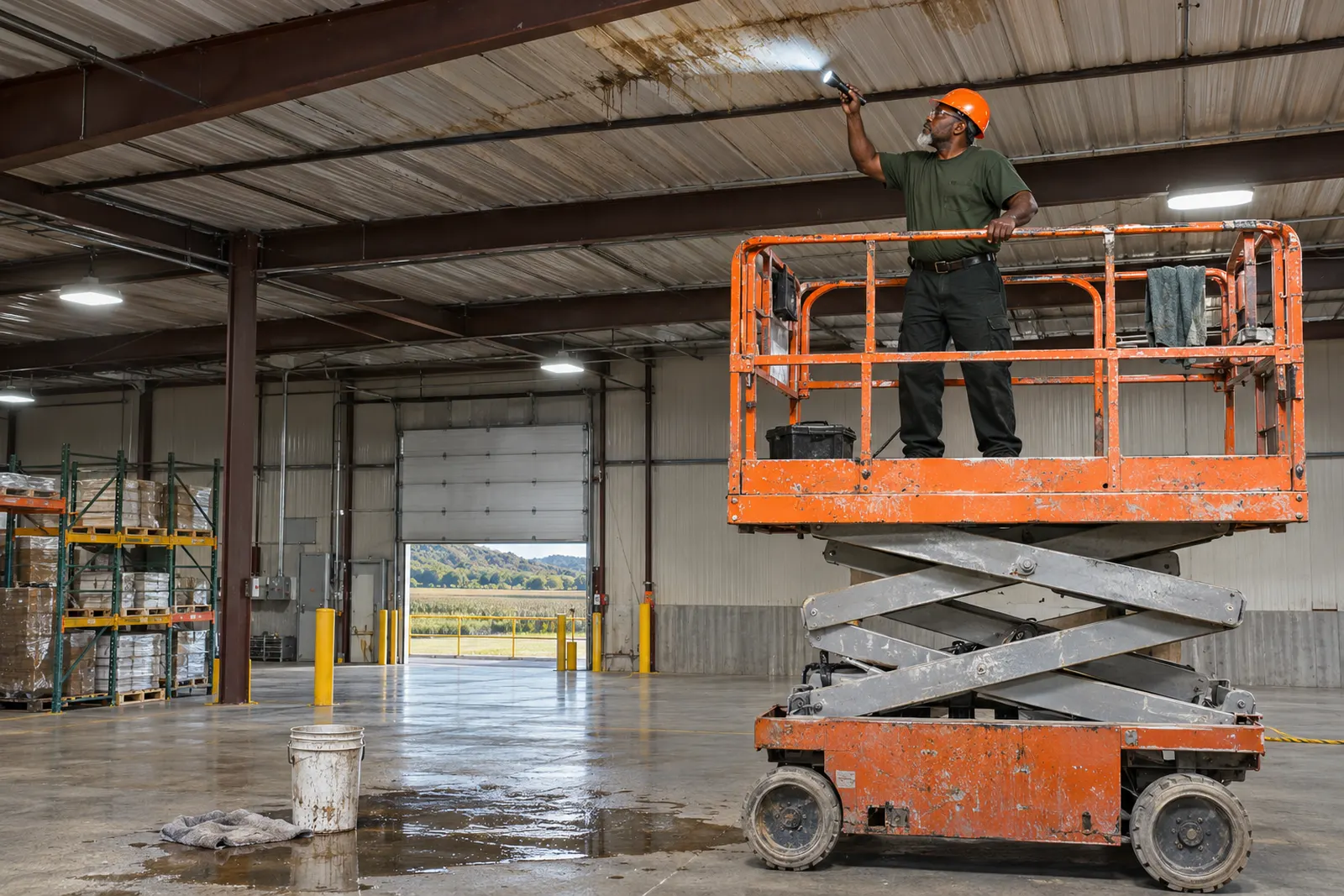
Rain that enters at a pond can run along the deck flutes before it drips, so the stain inside seldom sits under the opening. We trace it back from below.
 Rooftop Units
Units on a flat roof often sit where water collects, and the curb flashing stays wet. We reflash the curb and add tapered crickets that steer water around it.
Standing water is the slow kind of leak. Fixing the drainage stops the damage where it starts.
Removing ponds early keeps the steel deck from sagging further under the weight of the water it holds after every storm.
Seams that dry out between rains hold far longer than seams that sit underwater for days at a time.
Clear strainers and sealed drain bowls carry every storm off the roof instead of into the building below.
Ponds left in fall freeze into ice sheets that stress the seams, block the drains, and add weight to the deck.
These repairs cover most of what low Carter Lake roofs need.
Clear the bowl, replace the strainer, and reset the clamping ring with new membrane flashing.
See Flat Roof RepairAdd tapered insulation so water moves to the drains instead of pooling between them.
Probe and reweld or retape every seam inside the ponding ring.
Tell us which part of the roof holds water after rain. We map the ponds, test the seams beneath them, and send a written price for the drainage repair.
Get A Free EstimateDrainage repairs follow four steps so the water leaves the roof and stays off it.
We visit after rain, or flood-test a dry roof, and outline every area where water stands and how deep it gets.
Drains and scuppers get cleared, then run with water to see whether they flow or need new bowls and flashing.
Seams inside each pond get rewelded, and wet insulation found by core cuts gets cut out and replaced.
Tapered crickets or a lowered drain go in where water would otherwise collect again after the next storm.
After the next good rain, we look again for standing water and send photos, so you can see where the ponds used to sit.
We also repair commercial roofs in these towns around Carter Lake.
Somewhere else? Call us or send us a message.
Warehouses, dealer shops, and cold storage across the city.
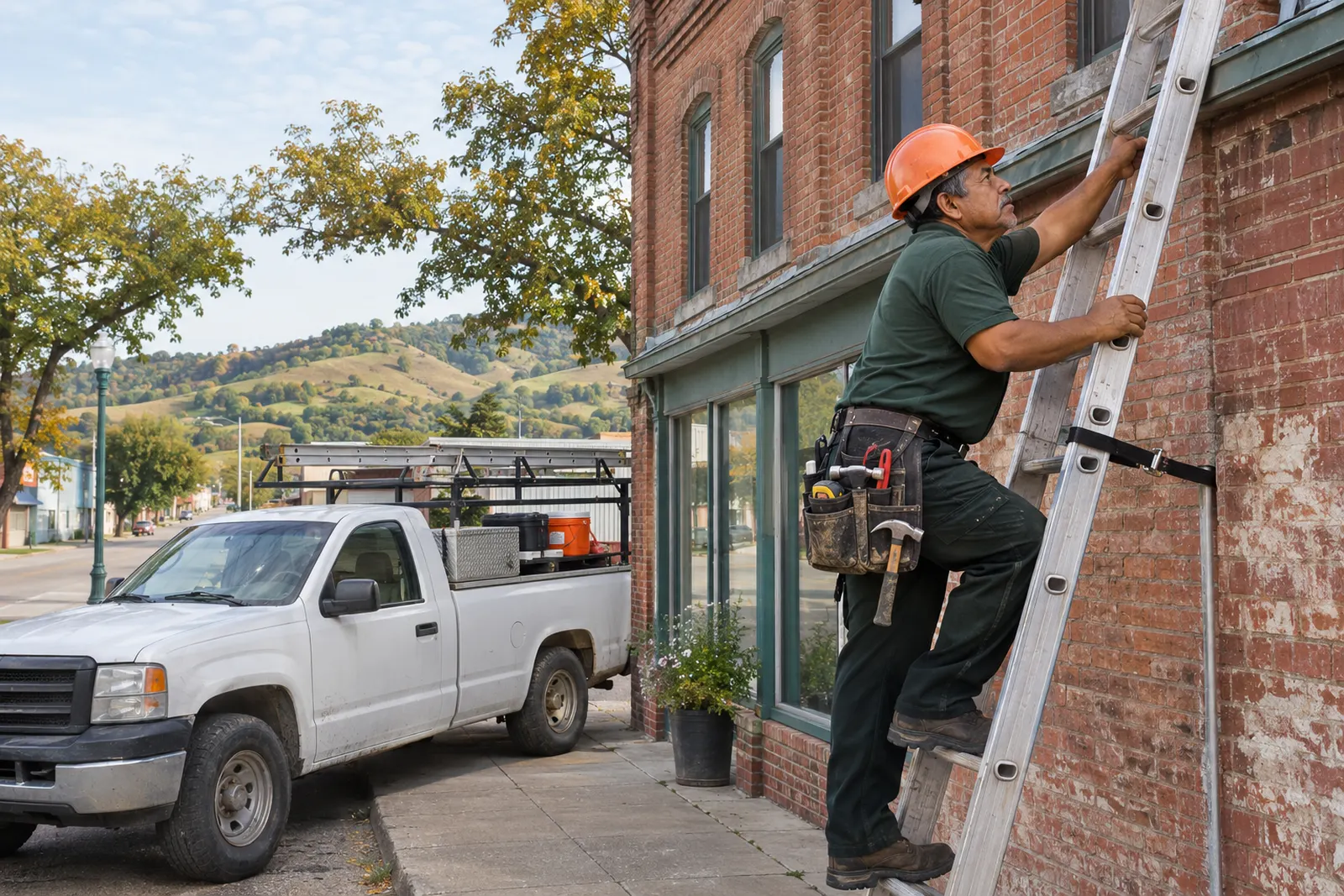
Brick storefronts and offices near the Mills County courthouse.
Shops and warehouses timed around freeze and thaw.
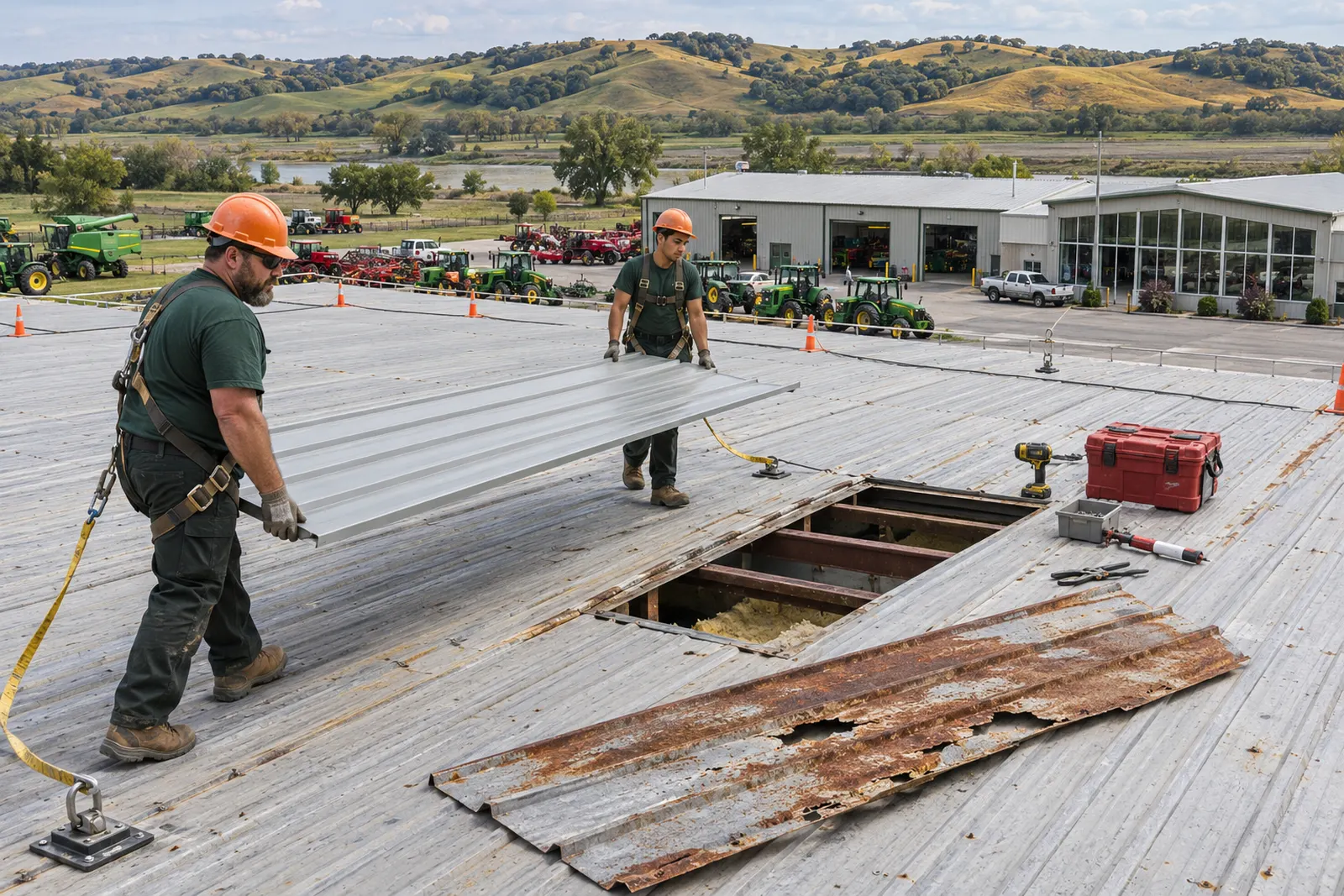
Metal shop and farm-service buildings with screw-line leaks.
Harrison County seat offices with past leak records.
Answers about drains, ponding, and leaks on low roofs.
Open membrane seams, loose flashing at walls, clogged drains, and backed-out screws on metal roofs lead the list. On older roofs, the deck has often sagged enough to hold ponds. We inspect each roof to find which of these is letting water in, and repair that source.
Drainage work and wet insulation drive most of it. Clearing and reflashing a drain is a small job, while cutting out soaked boards under a large pond and adding tapered crickets takes more labor and material. The written price lists each item separately.
The drains and the low spots. A contractor should run water through each drain, outline where water stands after rain, and core under the ponds before quoting any seam patch, since a patch sitting in standing water fails again.
Ponding alone calls for a drainage fix first. Clearing drains, adding crickets, and repairing a sagging deck section solve most cases. Replacement enters the conversation when core cuts find wet insulation under most of the roof.
Roofs near the airfield get the same drain, seam, and flashing repairs as anywhere else. The difference is planning: any crane or tall lift gets checked against airport height rules before the job is scheduled, so we keep most repairs to ladder and hand-carried work.
Drains only help where water can reach them. A sagging deck section, a low spot between drains, or a curb sitting across the flow keeps water in place. Tapered insulation crickets or a repaired deck section give that water a path to the nearest outlet.
Tell us where water stands on the roof or drips inside. We test the drains, map the ponds, and send a written price.