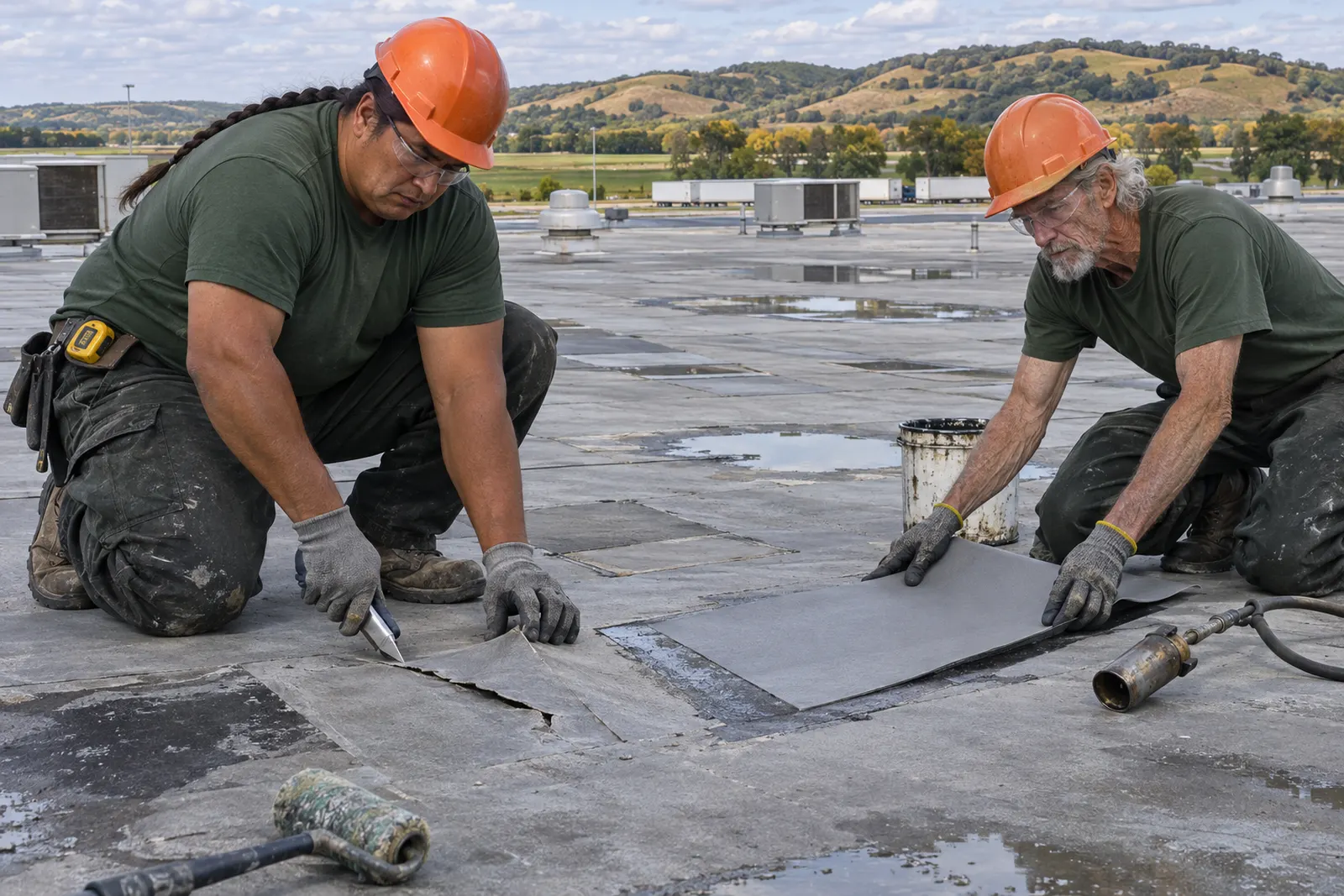
 Exhaust Fans
Roof Repair Around Exhaust Fans
Grease and chemical exhaust soften some membranes around fan curbs. We clean the area, replace the damaged membrane with a compatible sheet, rebuild the curb flashing, and add grease containment.
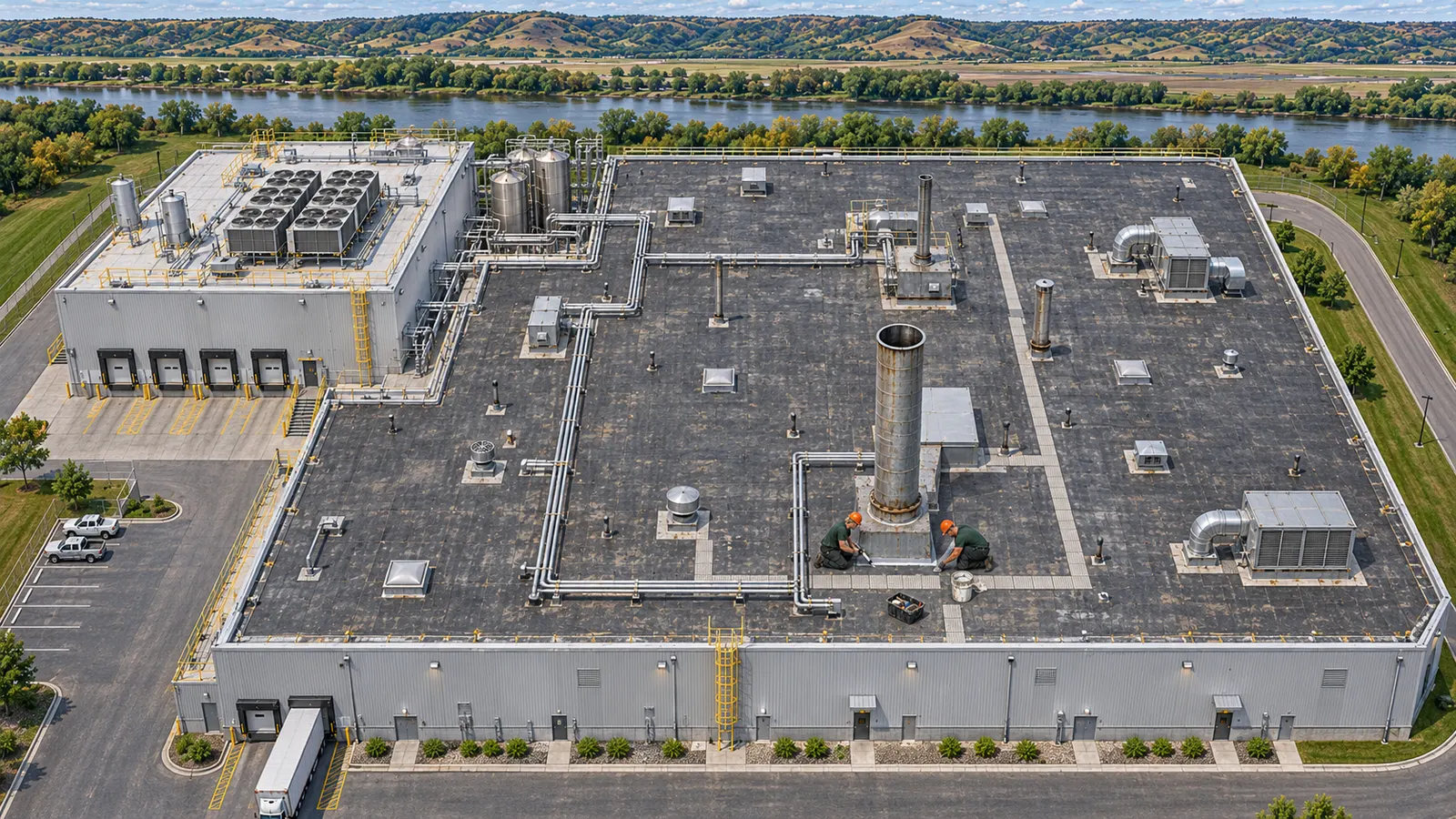
As a Council Bluffs industrial roof repair contractor, we fix curb flashing, process vents, expansion joints, and drains on plant and warehouse roofs, scheduled around your shifts.
Council Bluffs industrial roof repair covers plant, cold storage, and distribution roofs. Find the case that fits your building.
Vibration loosens curb flashing, and exhaust residue softens some membranes right where the fans sit.
Long buildings move with temperature swings, and the joint covers between sections crack first.
Canopy-to-wall joints take water from the main roof, and truck strikes bend the canopy edges.
Core cuts that come up wet across most bays point toward recovering the roof in phases.
Plant roofs carry equipment, exhaust, and maintenance traffic, and four weak spots show up again and again.
Exhaust FansGrease and chemical exhaust soften some membranes around fan curbs. We clean the area, replace the damaged membrane with a compatible sheet, rebuild the curb flashing, and add grease containment.
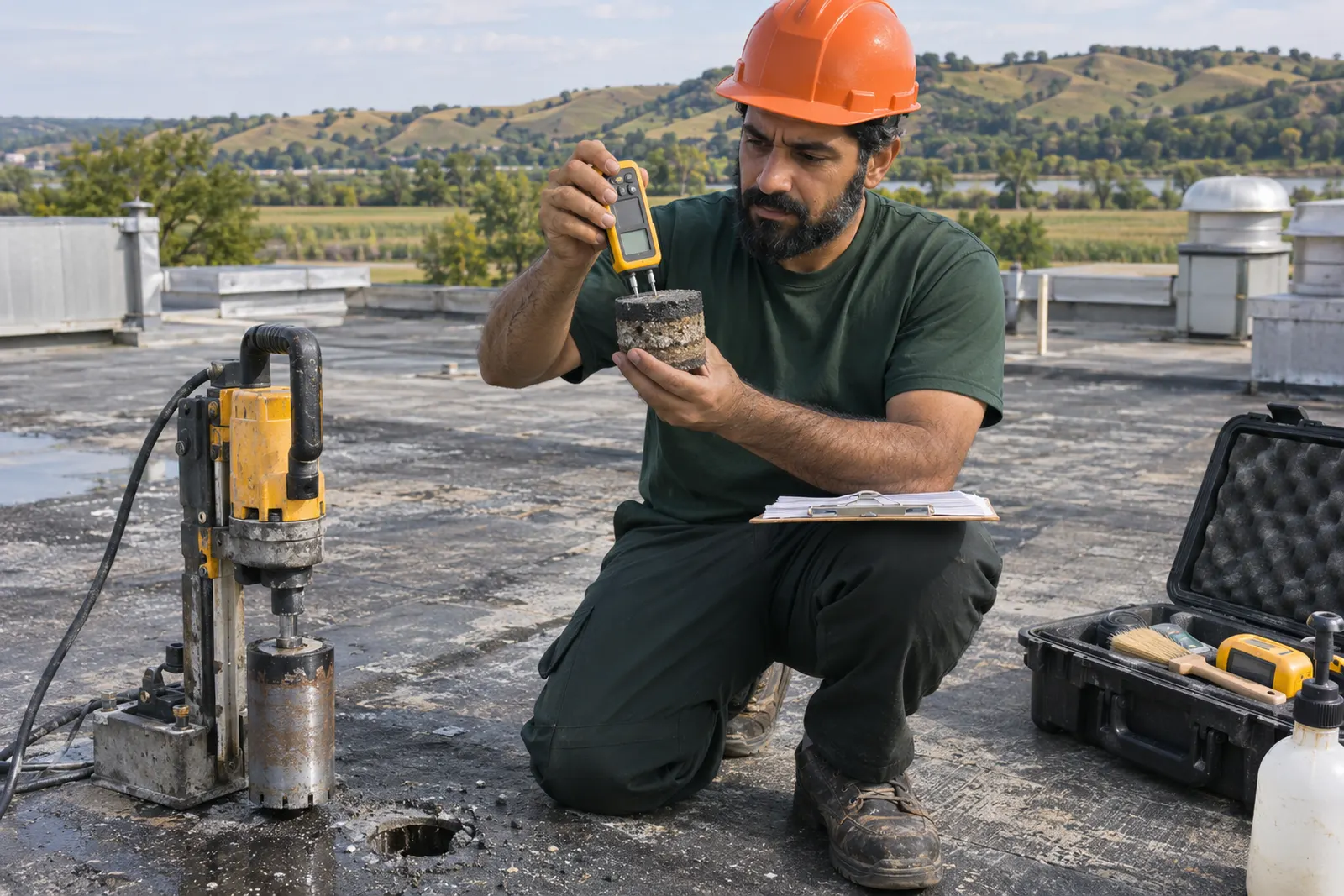 Production Areas
Leaks over lines get a temporary cover first. We find the entry point, cut out wet insulation, and rebuild the roof layers during the downtime you set.
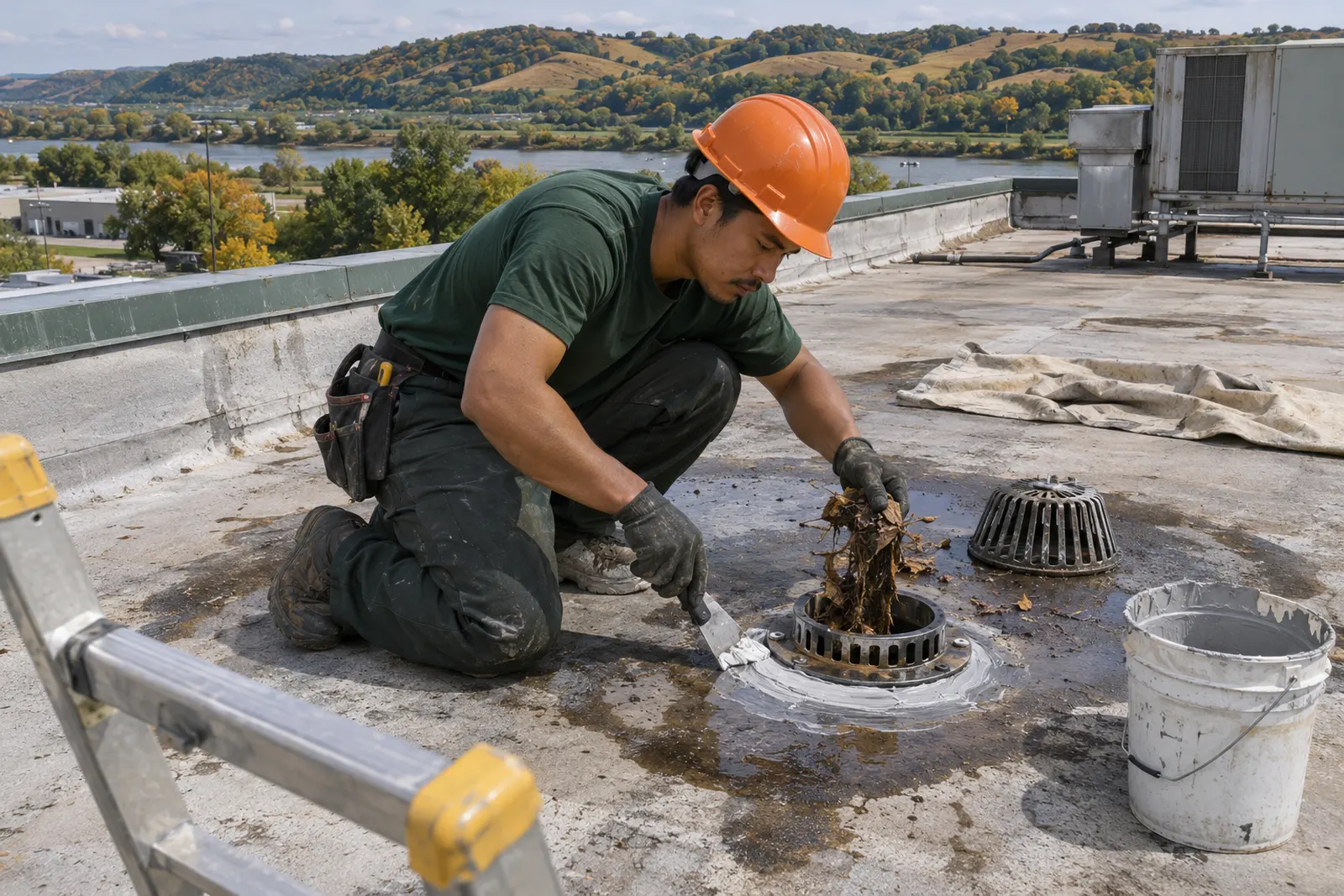 Drains
Dust and debris from the plant settle in drains and gutters, backing water up against seams. We clear them, reflash the bowls, and add strainers sized for the debris.
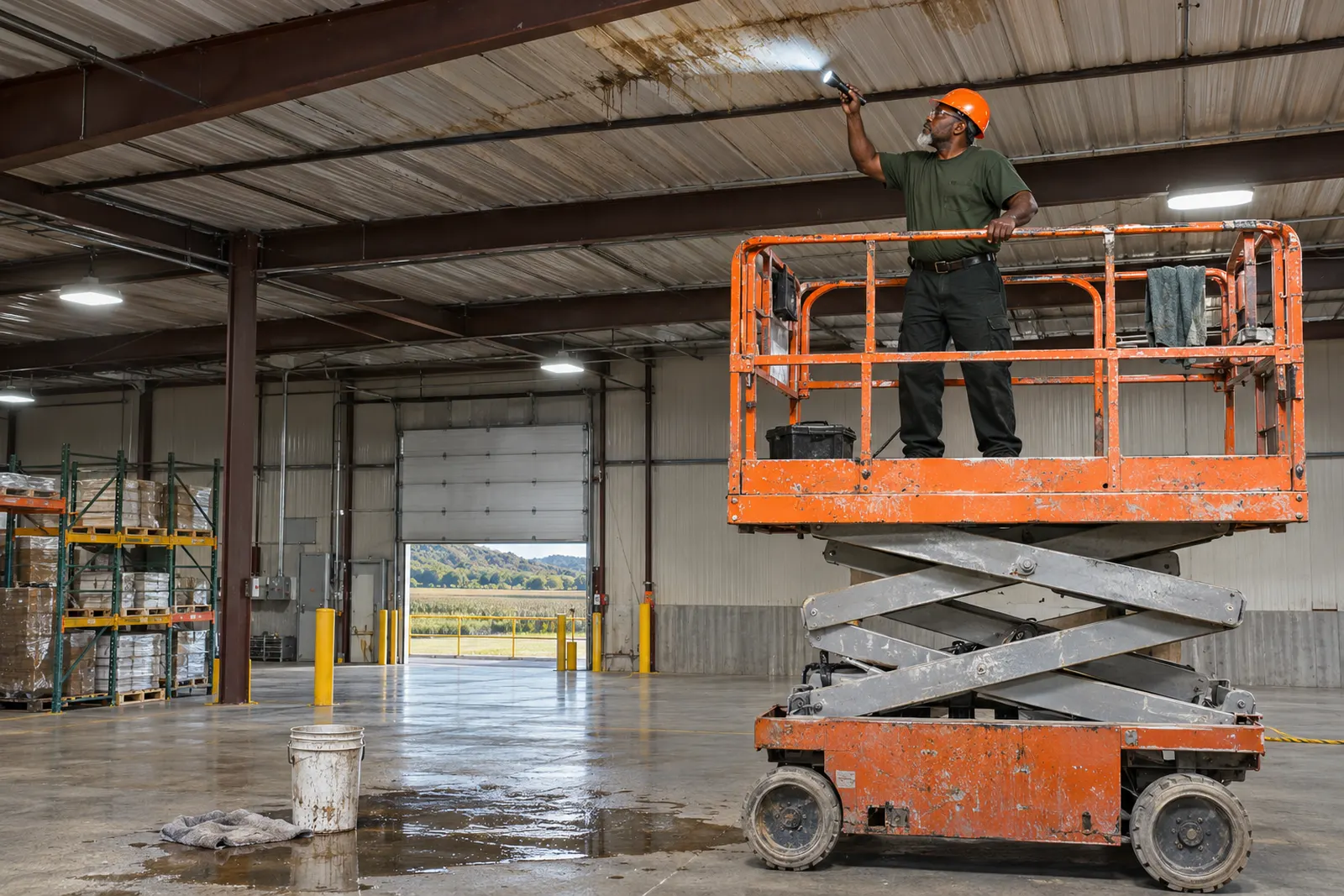 Deck Underside
Rust streaks on the deck underside or on joists show water has sat for a while. We trace the source above and check whether the deck needs repair along with the roof.
Plant repairs work around equipment and process. Each method below lists when it fits.
Strip old flashing at fan and unit curbs, replace damaged membrane, and wrap the curb with new flashing and a counterflashing cap.
When It FitsLeaks at fans, units, or vents.
Remove the cracked cover, set a new flexible joint cover, and tie it into the membrane on both sides.
When It FitsLeaks along a line between building sections.
Clear debris from drains and gutters, replace strainers, and reflash drain bowls where water has backed up.
When It FitsPonding around drains or backed-up gutters.
Lay walk pads along service routes to rooftop equipment so maintenance traffic stops wearing through the membrane.
When It FitsScuffed membrane along paths to units.
A planned repair lets the plant choose the timing. Waiting for the next failure lets the weather choose.
Leaks fixed during a scheduled shutdown keep water off production equipment between shutdowns.
Sealing curbs and drains early keeps standing water from rusting the steel deck beneath.
Cold storage and warehouse stock under a dry roof avoid water and condensation damage.
Ranked findings let you budget the urgent roof items now and the rest at the next shutdown.
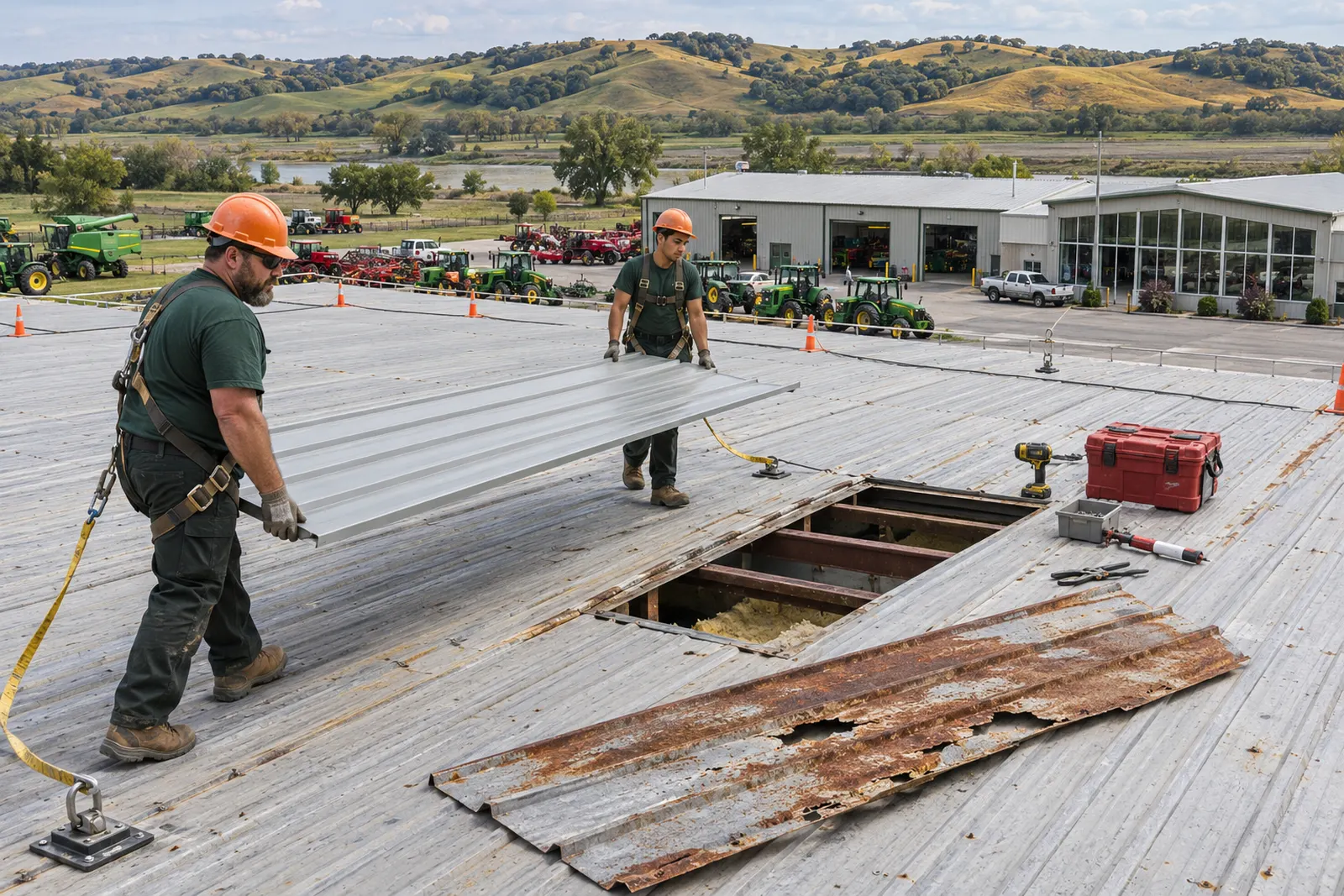
Call with the bay and line affected. We set up temporary protection first and schedule the permanent repair around your shifts.
Call UsIndustrial repairs follow four steps planned around your production schedule.
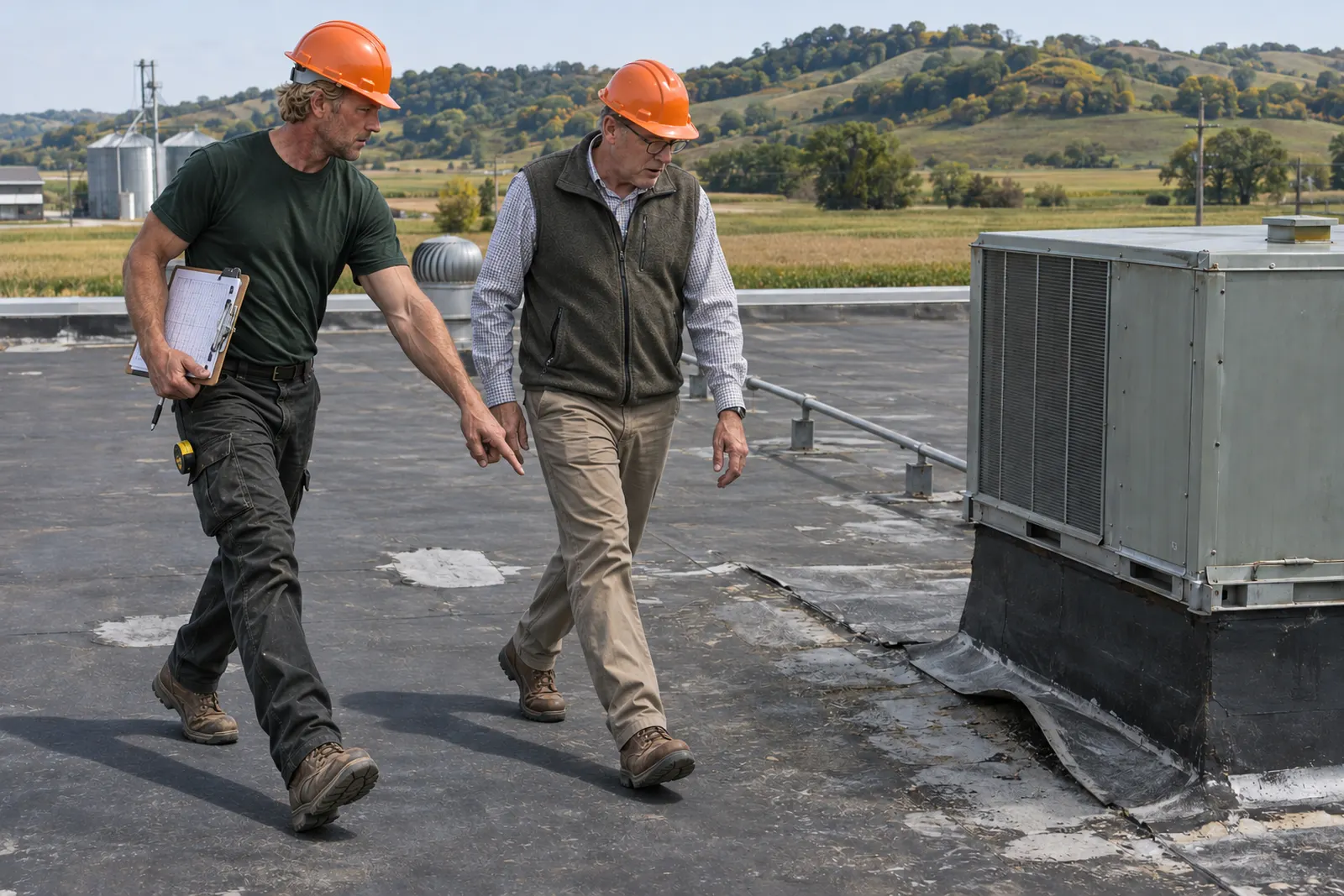
We inspect the roof surface, the deck underside, fan curbs, process vents, and drainage, and take core samples to find wet insulation.
Findings come back ranked, with photos, so urgent leaks over equipment go first and the rest fit your next planned shutdown.
Before cutting into the roof, crews cover lines and equipment below the work area and coordinate access with your maintenance staff.
Wet material comes out, roof layers go back in, and every process penetration in the area gets new flashing before the crew leaves.
Plants often have membrane, metal, and leak problems side by side.
Office and warehouse sections with membrane roofs get seam, drain, and ponding repair.
See Flat Roof RepairMetal-roofed shops, storage, and canopies on plant property get fastener and lap repair.
See Metal Roof RepairStains in offices or break rooms with no clear source get traced first.
See Leak RepairAnswers about inspections, exhaust curbs, docks, and warning signs.
We cover the roof surface, the underside of the deck, exhaust fan curbs, process vents, and the drains. We look for corrosion from plant exhaust, grease buildup, and wear from maintenance traffic, and core samples show whether insulation is wet. Findings are ranked by urgency so repairs fit the plant's schedule.
We find where water enters, cut out the wet material, and rebuild the roof layers. Leaks over production lines get temporary protection first, the work is scheduled around shifts, and equipment below is covered against debris. Process penetrations in the repair area get new flashing at the same time.
The curb flashing is rebuilt and the damaged membrane around the fan is replaced. Grease and chemical exhaust soften some membranes, so we clean the area, use a sheet that holds up to that exhaust, and add grease guards or traps where residue collects on the roof.
Expansion joints, equipment curbs, and roof drains go first. Joints crack as long buildings move with temperature swings, curbs pick up vibration from fans and units that loosens their flashing, and drains clog with process dust until water backs up against the seams.
The joint where the canopy meets the wall takes water running off the main roof above. Failed counterflashing, open sealant joints, and clogged canopy gutters push that water into the wall, and truck strikes bend the canopy edges. We reflash the wall joint and clear the canopy drainage.
Inside, look for water stains on the deck underside, rust on structural steel, and musty odors. On the roof, look for blisters, open seams, corroded panels, and ponding that lasts days after rain. Dripping during snowmelt is another sign the roof needs repair.
Tell us which bay leaks and when your next shutdown falls. We inspect, rank the findings, and price the repair.