Roof Access
Downtown Glenwood buildings get reached from alleys with ladders and a small hoist, while Council Bluffs warehouses and Avoca shops often need a lift set at the eave. Access is planned before the price is final.
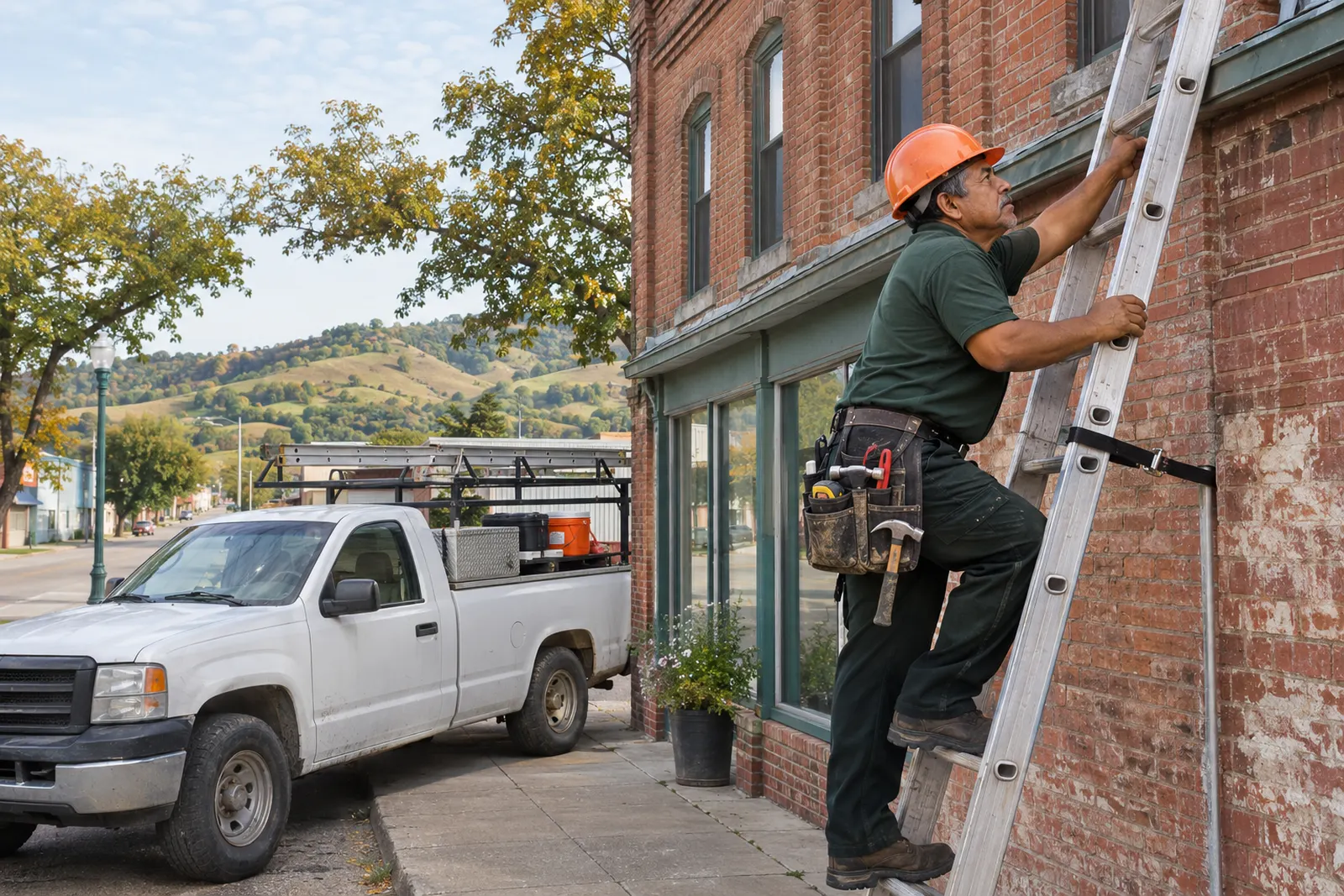
We offer commercial roof repair near Council Bluffs in five nearby towns, with the same inspection, written scope, and repair methods used in the city.
We take commercial roof repair near Council Bluffs in the six towns below, each with its own mix of buildings and roof problems, from brick storefronts and big warehouses to metal shops.
Not on the list? Call us or send us a message.
Logistics warehouses, dealer shops, cold storage, and strip retail fill the city. Most repairs here are drain, seam, and curb work on large membrane roofs, plus fastener and lap repairs on metal shops, with tenant hours built into the plan on retail roofs.
The Mills County seat has brick storefronts and offices with shared walls. Repairs center on coping, counterflashing, and scuppers between buildings, with ladder and hoist access planned from alleys and back lots so front doors stay open.
This Pottawattamie County city sits west of the Missouri River beside Omaha. Its low, flat commercial roofs hold water, so clogged drains, ponding, sagging deck sections, and seams in standing water lead the work.
Shops and warehouses in Harrison County's largest city see hard freezes, spring thaw, and summer storms. We seal winter leaks right away, then plan seam welds, lap sealants, and flashing for weather that lets them bond.
Metal shops, equipment storage, and farm-service buildings make up much of the work here. Cracked screw washers, open laps, loose ridge caps, leaking skylight panels, and rusted panel ends cause most of the leaks.
Offices and shops in the Harrison County seat often carry years of patches from different crews. A leak record of dates, weather, and drip spots guides each repair, and our photos get added to it.
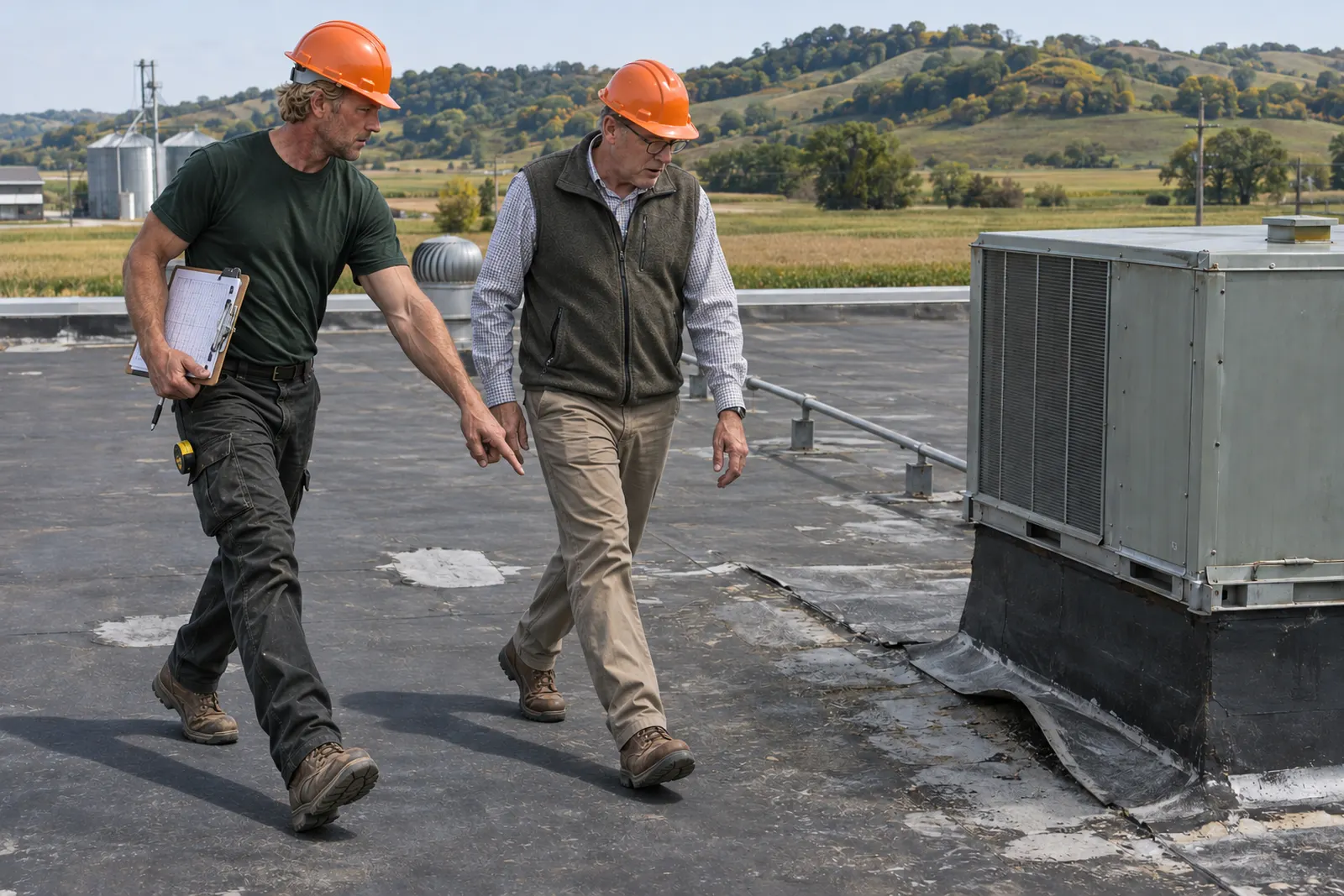
Call with the address. If the building sits close to these towns, we can usually set up an inspection there too, on the same terms as in the city.
Call UsThe repair methods stay the same everywhere. These six things change with the town and the building, and they shape each estimate.
Downtown Glenwood buildings get reached from alleys with ladders and a small hoist, while Council Bluffs warehouses and Avoca shops often need a lift set at the eave. Access is planned before the price is final.
Permit questions go to the city or county where the building sits. In Council Bluffs, the Building Division confirms what a repair needs, and other towns get the same check with their own office.
Membrane roofs lead in Council Bluffs and Carter Lake, while metal panel roofs lead on shop buildings in Avoca and around Missouri Valley. Many buildings mix both, with a metal shop beside a membrane office.
Freeze, thaw, and storm season shape when welds and sealants go on, especially on open lots north toward Logan and Missouri Valley. Winter leaks get a temporary seal until the weather allows the full repair.
Logistics warehouses and cold storage cluster in Council Bluffs, brick storefronts in Glenwood, and metal shops in Avoca, so each town leans toward different repairs and different roof details.
Low, flat lots in Carter Lake hold more water on the roof, so drains, crickets, and seam work inside ponds take up more of each job there than on sloped metal roofs elsewhere.
Answers about coverage, travel, and scheduling outside the city.
Travel is one line on the estimate, and it follows the distance to the building. The rest of the price comes from the same items as in the city: the roof system, the size of the damaged area, any wet insulation, and how the crew reaches the roof. Each item shows separately, so you can see what the distance adds.
Glenwood, Carter Lake, Missouri Valley, Avoca, and Logan, along with Council Bluffs itself. Buildings just outside those towns can often be added to a trip, so call with the address to check before you book. Each town has its own page here with the roof problems we see most there.
Yes. Every inspection covers seams, fasteners, drains, flashing, curbs, and edge metal, with core cuts where wet insulation is suspected. What changes is the focus: drains in Carter Lake, wall joints in Glenwood, and screw lines in Avoca. Every building gets the same written scope and photos.
The city or county where the building sits. We confirm with that office whether a repair needs a permit before work starts, the same way we check with the Council Bluffs Building Division for buildings inside the city. Small patches and larger repairs are often treated differently, so we ask for each job.
Yes. Owners with buildings in more than one town can have them inspected on one route, which keeps travel down. Each building still gets its own findings, its own photos, and its own written price, so you can approve repairs one building at a time.
The methods stay the same: matched patches, new fasteners, rebuilt flashing, and wet insulation cut-outs. Older buildings get more attention at wall joints, past patches, and edge metal, since those parts carry the most history and the most repeat leaks.
Call with the address. Buildings in or near Glenwood, Carter Lake, Missouri Valley, Avoca, Logan, and Council Bluffs are usually inside the area, and we confirm it on the call before setting up the roof inspection. Farm buildings and shops on rural roads nearby count too.
The same four services cover every town: flat roof repair for membrane and built-up roofs, metal roof repair for panel roofs, leak repair for stains with no clear source, and industrial repair for plant roofs with curbs, vents, and joints. Each town page lists the problems we see most there.
Tell us the town and the building. We set up the inspection, check the whole roof, and send a written price for each repair we find.