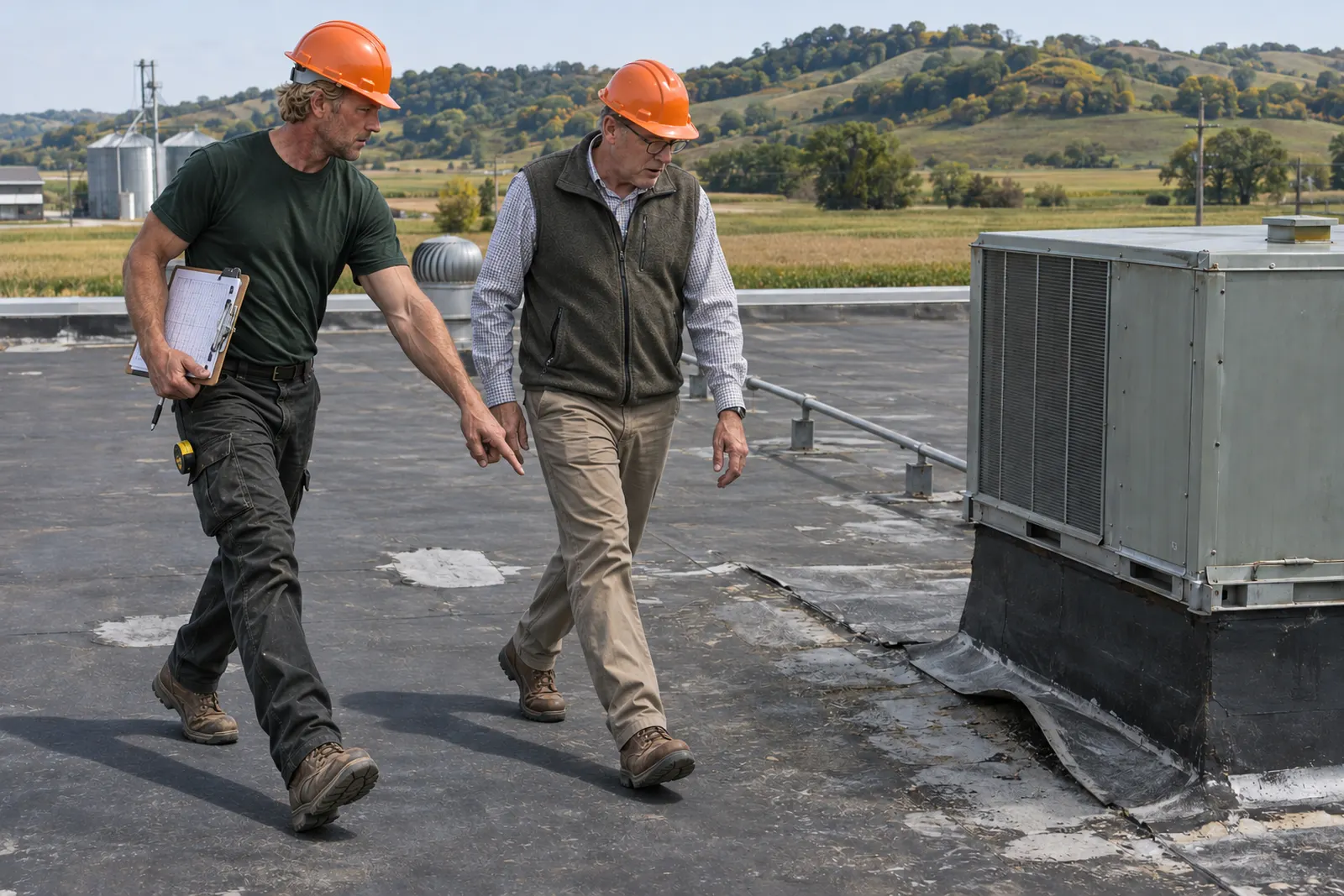
 Panel Laps
Metal Roof Seam Repair
Side and end laps open as sealant dries and panels move with the temperature. We clean out the old sealant, lay new butyl, and add stitch screws where the lap has pulled apart.

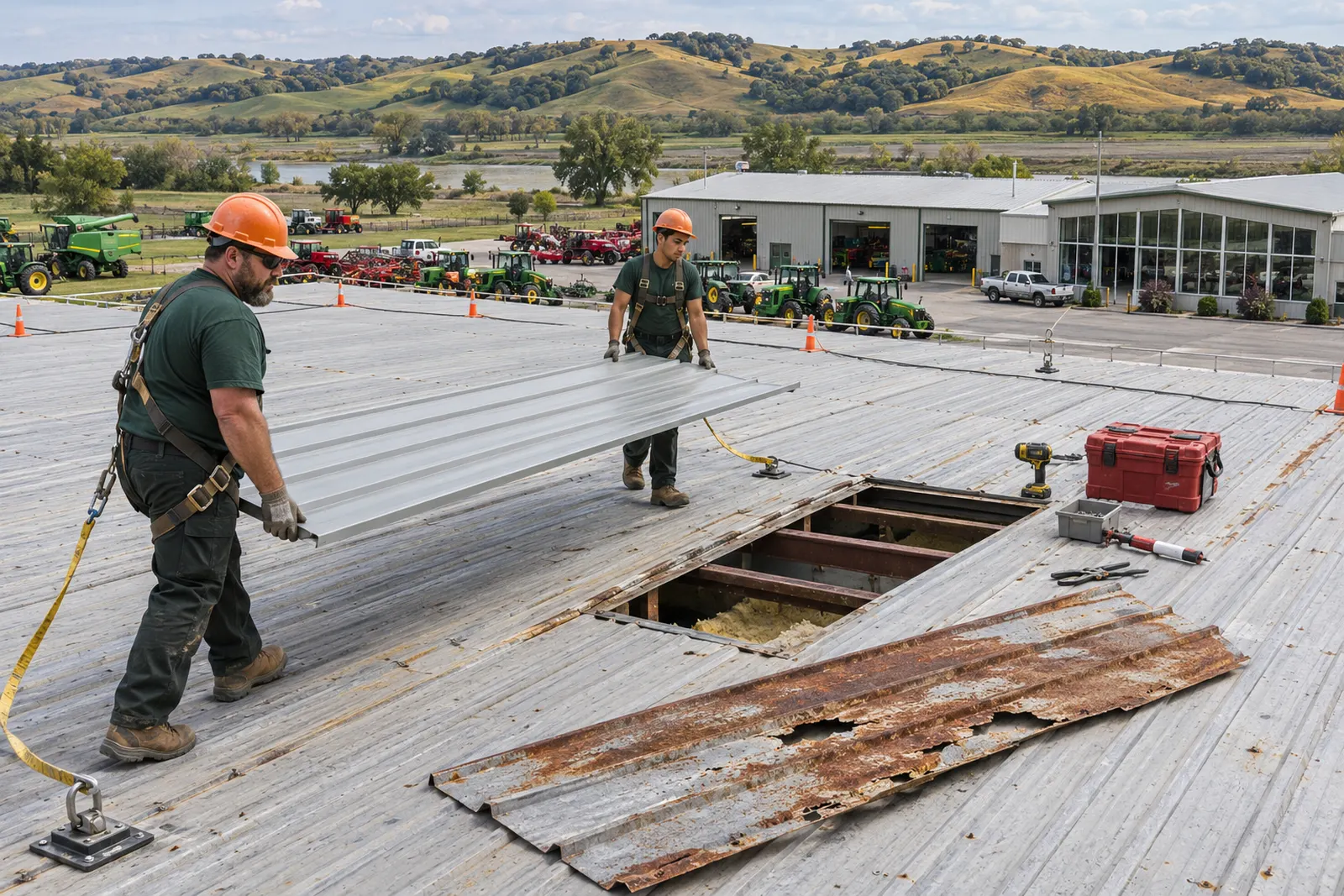
As a Council Bluffs commercial metal roof repair contractor, we replace failed screws, reseal laps, swap rusted panels, and refasten trim on shops and steel buildings.
Council Bluffs commercial metal roof repair fits panel roofs with solid steel and local damage. Find the case that matches your building.
Cracked rubber washers and screws backed out by heat and cold let water run down the shank into the building.
Dried lap sealant and loose closures open the end laps and ridge, where wind-driven rain gets under the panels.
Panels rusted through near vents, gutters, or exhaust stacks get swapped one at a time to match the existing profile.
Steel that flakes or flexes underfoot across most panels points to recovering or replacing the roof.
Metal roofs leak in predictable places. These four account for most of the calls on shops and steel buildings.
Panel LapsSide and end laps open as sealant dries and panels move with the temperature. We clean out the old sealant, lay new butyl, and add stitch screws where the lap has pulled apart.
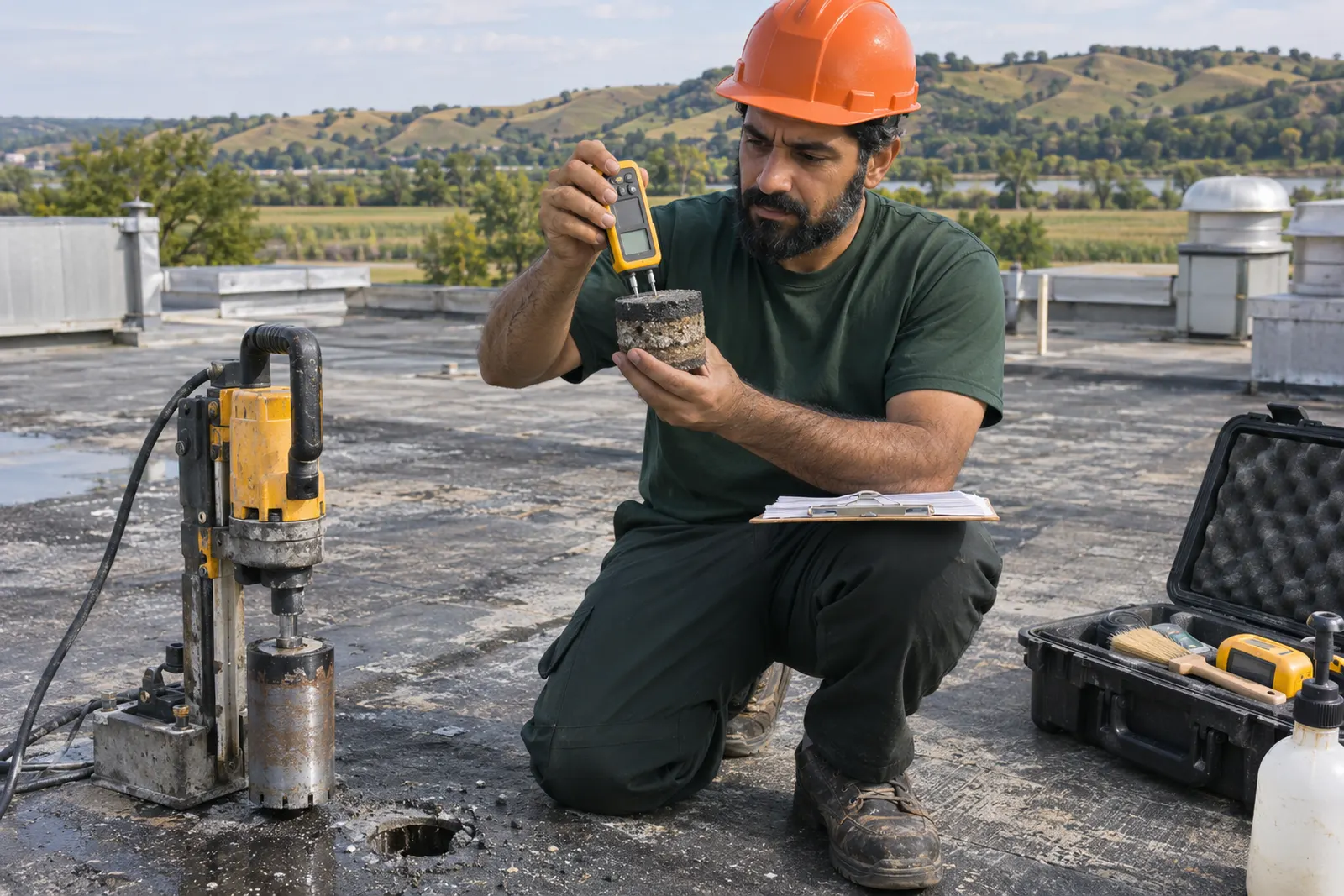 Fasteners
Screw holes leak once washers crack or the hole wallows out. We back out the worn screw, drive a larger fastener with a new washer into fresh metal, and patch abandoned holes.
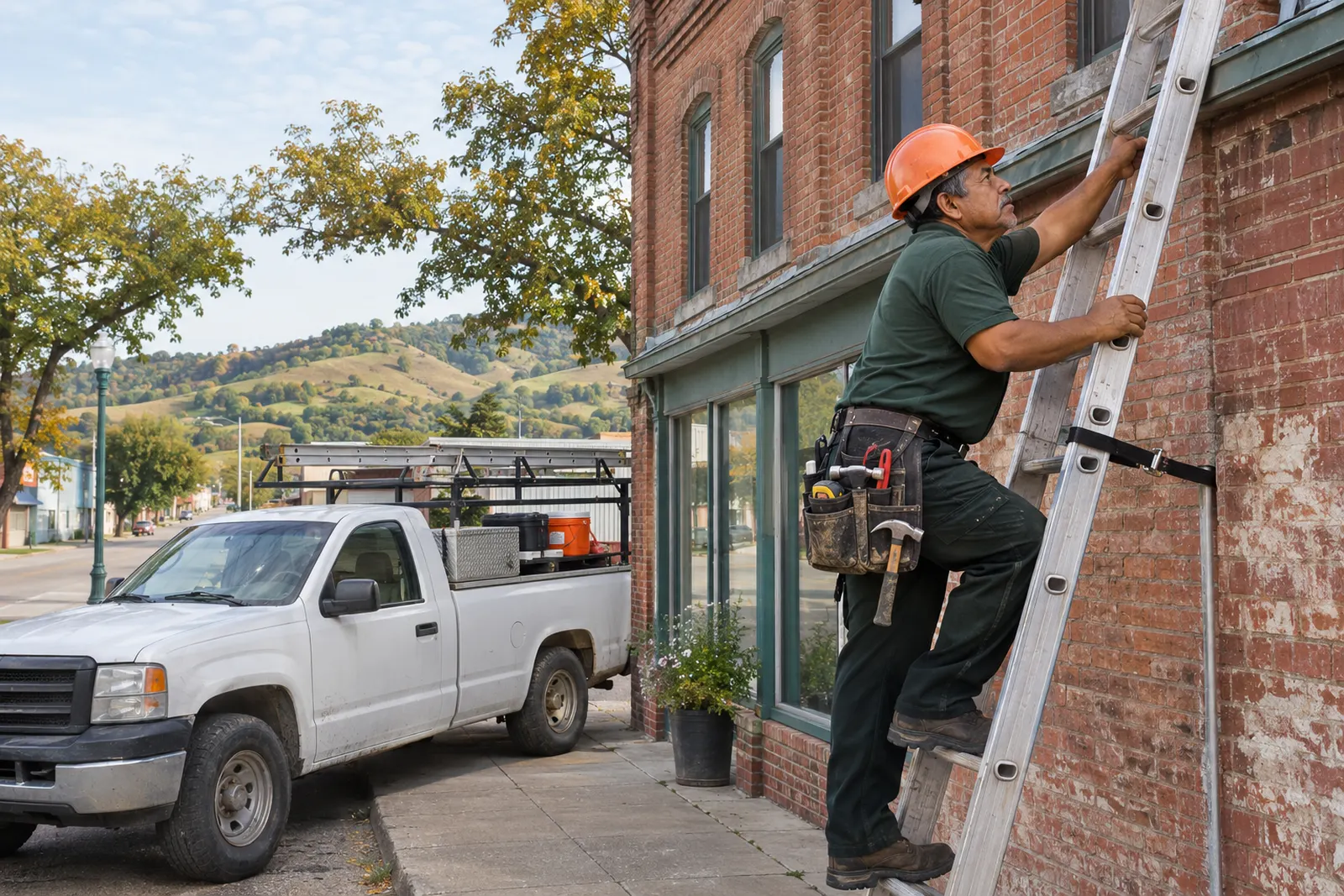 Trim And Ridge
Wind works trim loose at the eaves, rakes, and ridge first. We refasten or replace bent pieces, renew the closures under the ridge cap, and seal the trim laps.
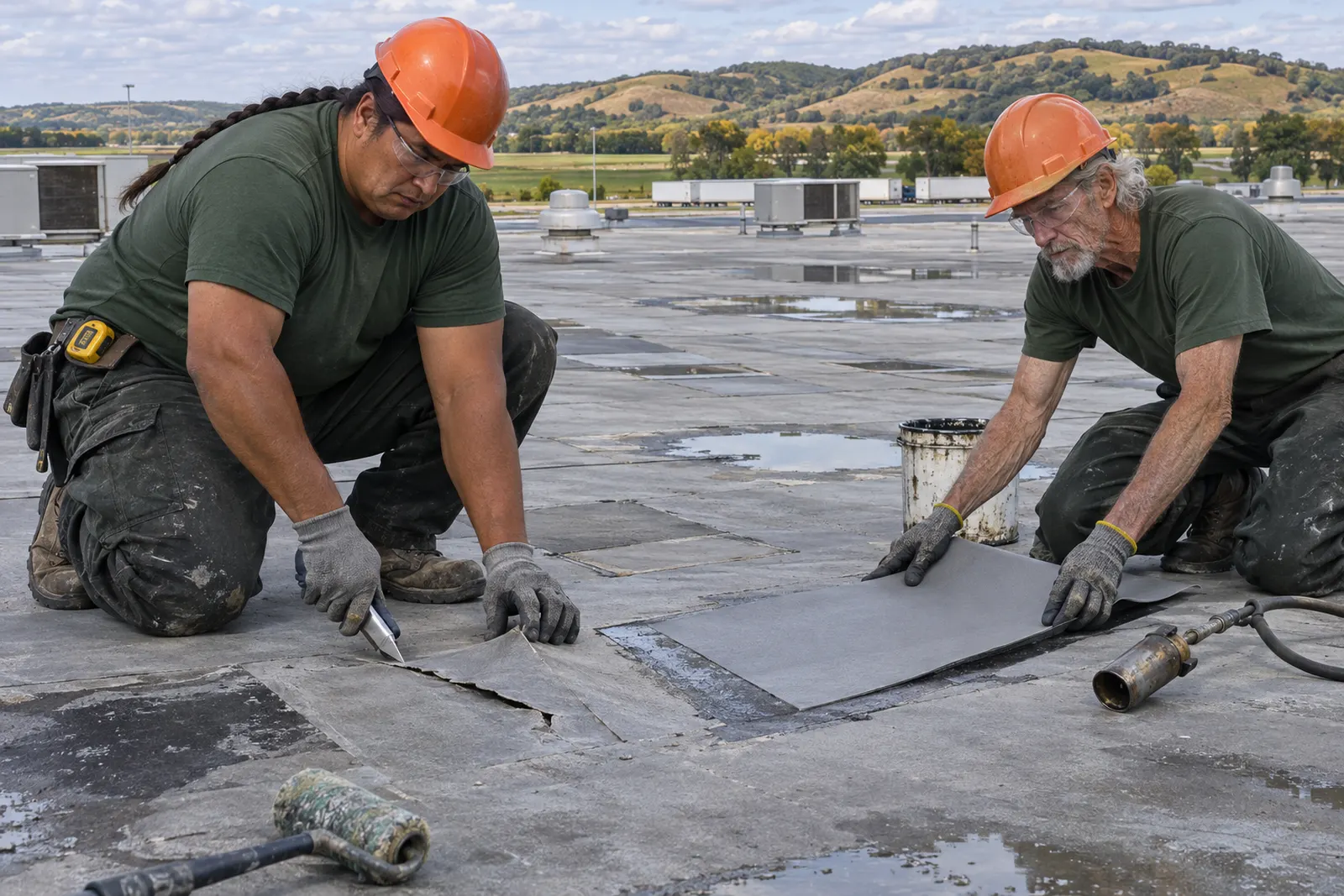 Wind Damage
Edges and corners take the most uplift in a storm. We refasten lifted panels, add screws in those zones, and reseal any laps that opened when the panels flexed.
Each method matches a condition found during inspection. The right column shows when we use it.
Remove worn screws, drive oversized fasteners with new EPDM washers, and seal any hole that no longer holds a screw.
When It FitsWashers cracked or screws backed out along a run.
Clean the lap, remove failed mastic, apply butyl tape or sealant, and embed reinforcing fabric over wider gaps.
When It FitsDrips at end laps, side laps, or ridge closures.
Lift out the rusted panel, set a new one of the same profile and gauge, and fasten and seal both of its laps.
When It FitsRust through one or a few panels.
Reseal skylight panels, pipe boots, and stack flashings, and replace cracked skylight panels with matching profiles.
When It FitsLeaks around skylights, vents, or exhaust stacks.
Metal roofs give warning before they fail across the board. Acting on those warnings keeps the steel in service.
Purlins and insulation under a leaking screw line stay dry once the fasteners are replaced.
Water held at a lap starts rust that spreads along the panel, so a resealed lap stops it in place.
Service bays and storage areas stay in use while crews work panel by panel overhead.
Edge and corner panels refastened before storm season hold tighter against uplift.
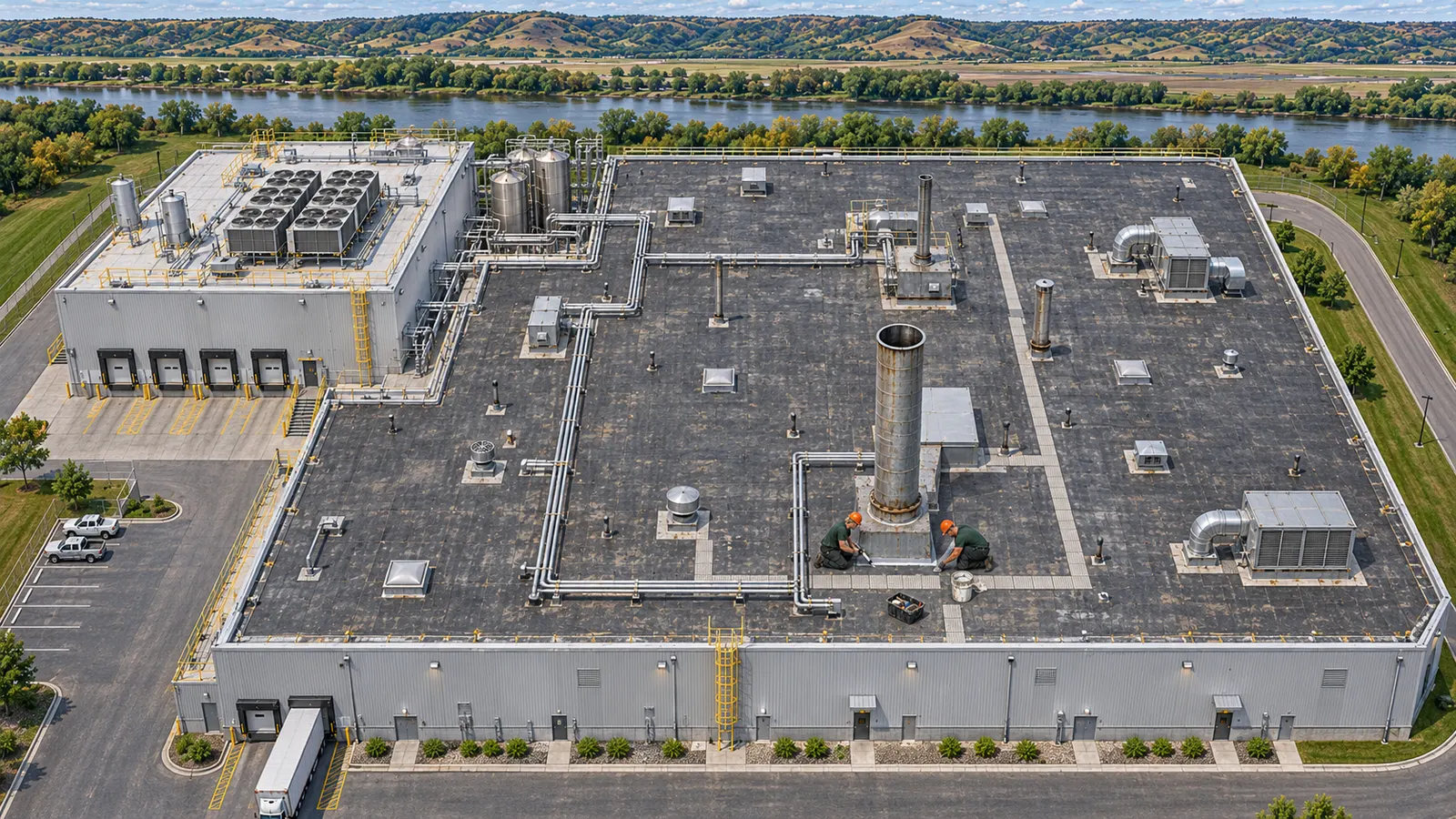
Send the address and where the drips line up. We check every fastener along that run and price the replacement before work starts.
Get A Free EstimateMetal roof repairs follow four steps so every failed screw and lap on the affected run gets found.
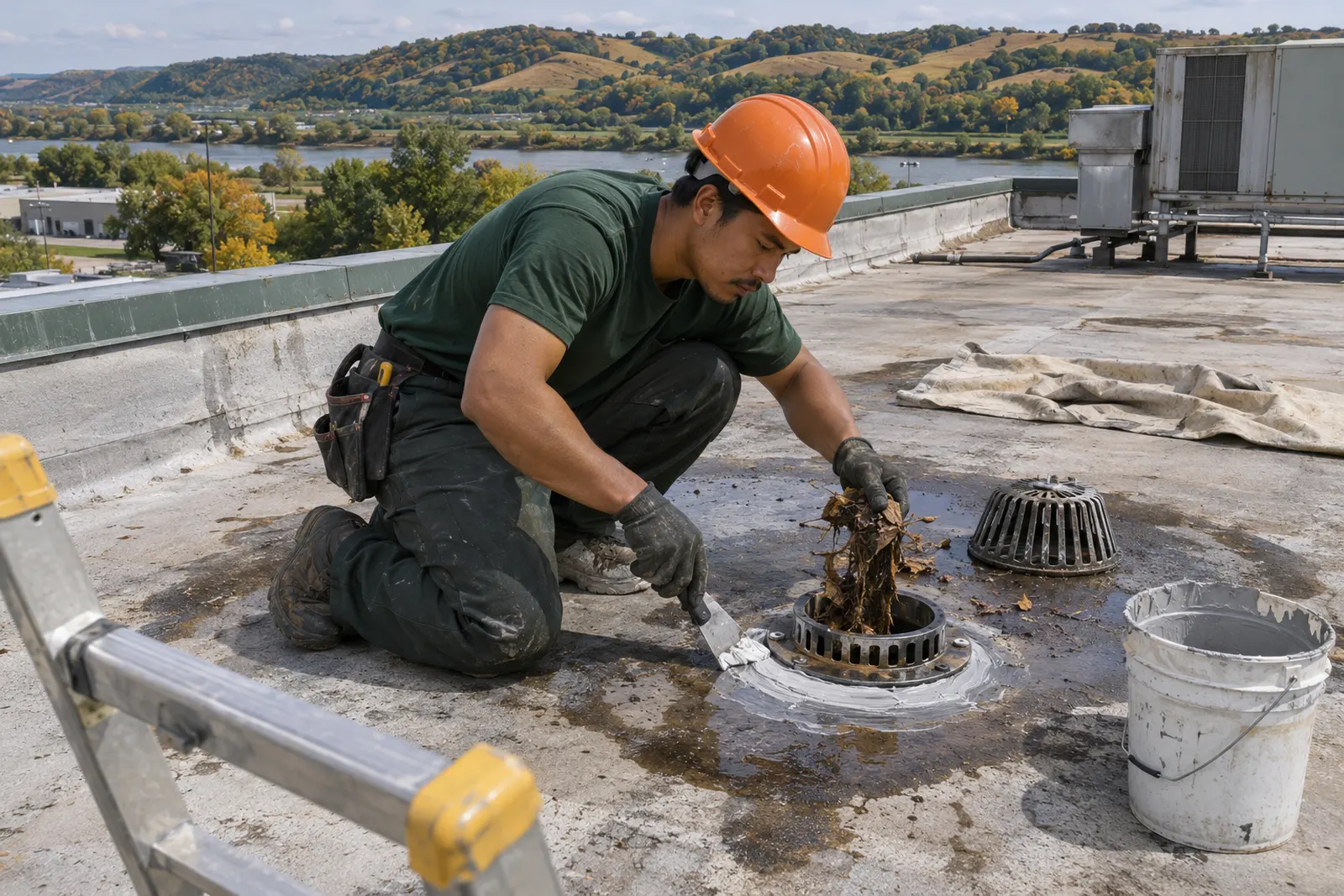
We walk each panel run and count cracked washers, backed-out screws, and empty holes, marking them so the repair scope has real numbers.
Rusted panels are measured for replacement, and every lap and ridge closure along the leak gets checked for dried sealant.
New fasteners, fresh lap sealant, and matching panels go in, working from the eave up so water always sheds over finished laps.
Repaired laps and screw lines get a hose test, and you receive photos of each repaired area for your records.
Some metal buildings have membrane sections or plant equipment that need their own repair.
Low-slope additions and office sections with membrane roofs get seam and drain repair here.
See Flat Roof RepairLeaks that show up far from any screw line call for full leak tracing.
See Leak RepairPlants with exhaust stacks through metal panels need curb and stack flashing from industrial repair.
See Industrial Roof RepairAnswers about seams, screws, wind, and cost on metal buildings.
We clean the lap, scrape out the failed sealant, and reseal it with butyl tape or mastic. Wider gaps get reinforcing fabric set into the sealant, and seams that pulled apart get new stitch screws to draw the panels tight first. Every lap along the leaking run is checked so the next one over gets caught too.
The count of failed fasteners and open seams, how much rust is present, and how many panels need replacing set the price. Roof height, slope, and lift access shape the labor. Replacing a handful of loose screws costs far less than swapping rusted panels, so we count fasteners and measure damage during the inspection.
Failed fasteners cause most metal roof leaks. Rubber washers dry out and crack, and daily heating and cooling backs screws out of their holes, so water runs down the shank. After fasteners, the next causes are dried lap sealant and loose flashing where the roof meets a wall, curb, or ridge.
The worn screw comes out and a larger fastener with a new washer goes in, biting fresh metal. Holes that are stripped or stretched get an oversized screw. Holes left from removed equipment get a metal patch bedded in butyl and fastened down around its edges.
We refasten lifted panels, replace bent trim, and reseal laps that opened when the panels flexed. Pottawattamie County design criteria list a 115 mph design wind speed, and edges, corners, and ridge caps take the most uplift. Where panels pulled loose, extra fasteners go into those zones.
Dealer shops most often need new fasteners, resealed skylights, and flashing repair around exhaust stacks. Vehicle exhaust in service bays can corrode the panels near vents, and ridge caps and wall-to-roof trim loosen with age. We replace corroded panel sections and reseal each penetration in that part of the roof.
Tell us which panel run drips or where rust shows. We count the failed screws and send a written repair price.