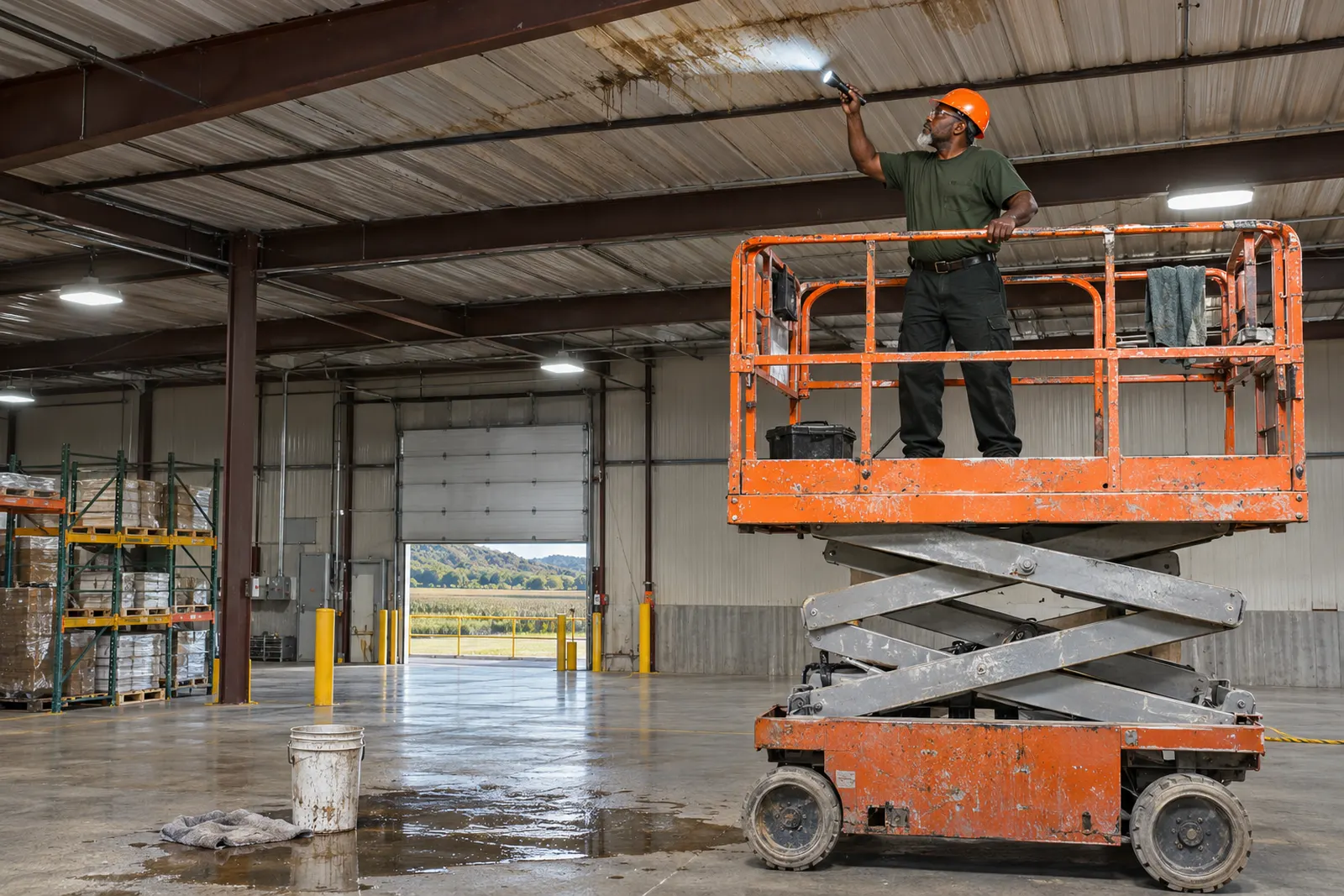
 Inside
The Same Leak Coming Back
A leak that returns after a patch usually means the patch went over the drip instead of the opening. We trace it again from inside and fix the real entry point.

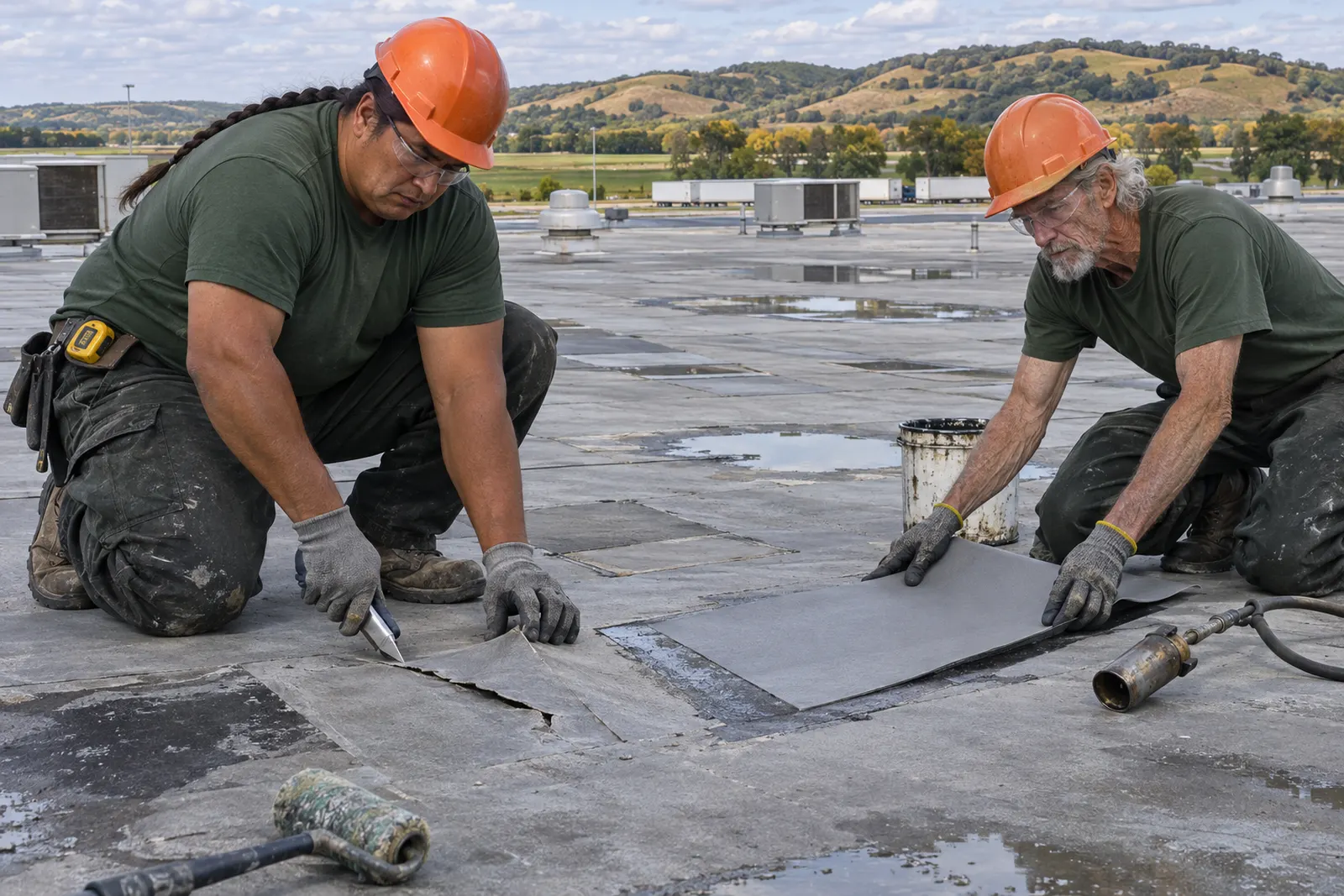
We provide Logan commercial roof repair that starts with your leak history, tracing each drip to its source and documenting every seam, screw, and flashing repair with photos.
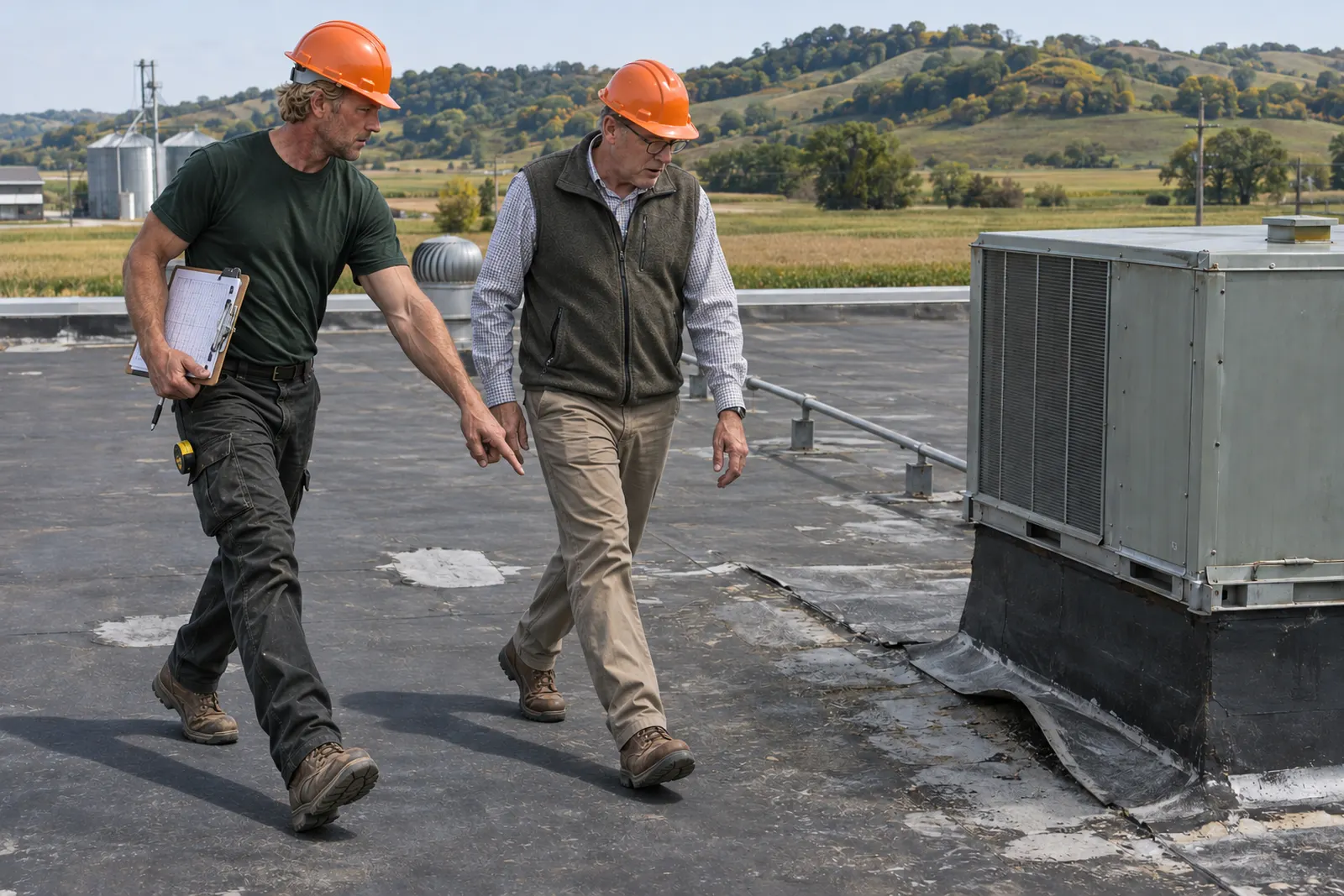
Logan commercial roof repair goes faster when we know the roof history. Offices and shops in the Harrison County seat, along the Boyer River, often carry years of patches from different crews.
A simple record of where and when each leak appeared, and what was done about it, tells us which patches failed and why. We add our findings and photos to that record so the next repair starts ahead. A one-page log per building is enough to begin.
Roofs with long patch histories show these four problems most often. Each one traces back to a repair that missed the opening or wore out.
InsideA leak that returns after a patch usually means the patch went over the drip instead of the opening. We trace it again from inside and fix the real entry point.
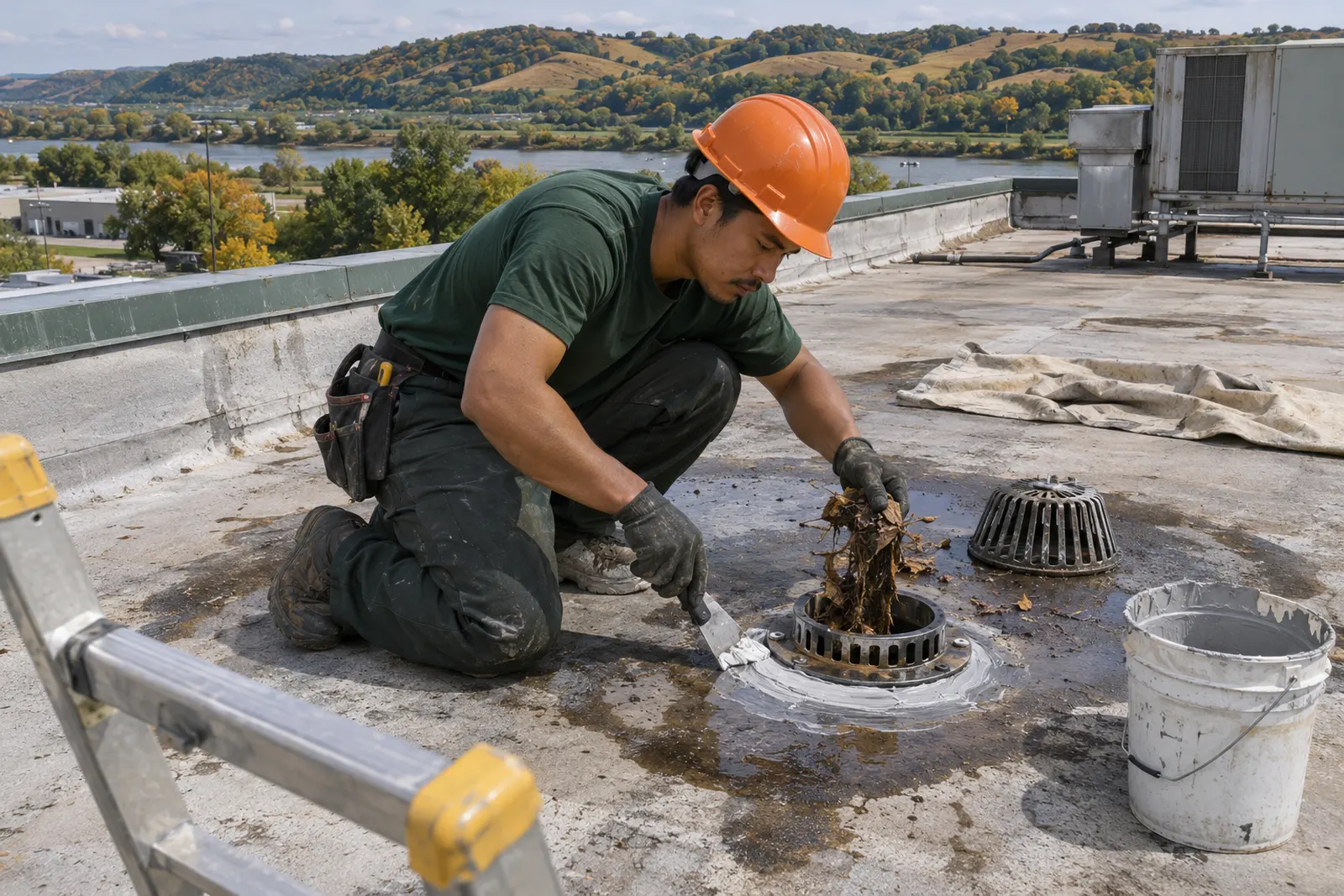 Old Patches
Layers of mastic and mismatched membrane hold water at their edges. We cut back to firm, clean membrane and install one patch that matches the roof.
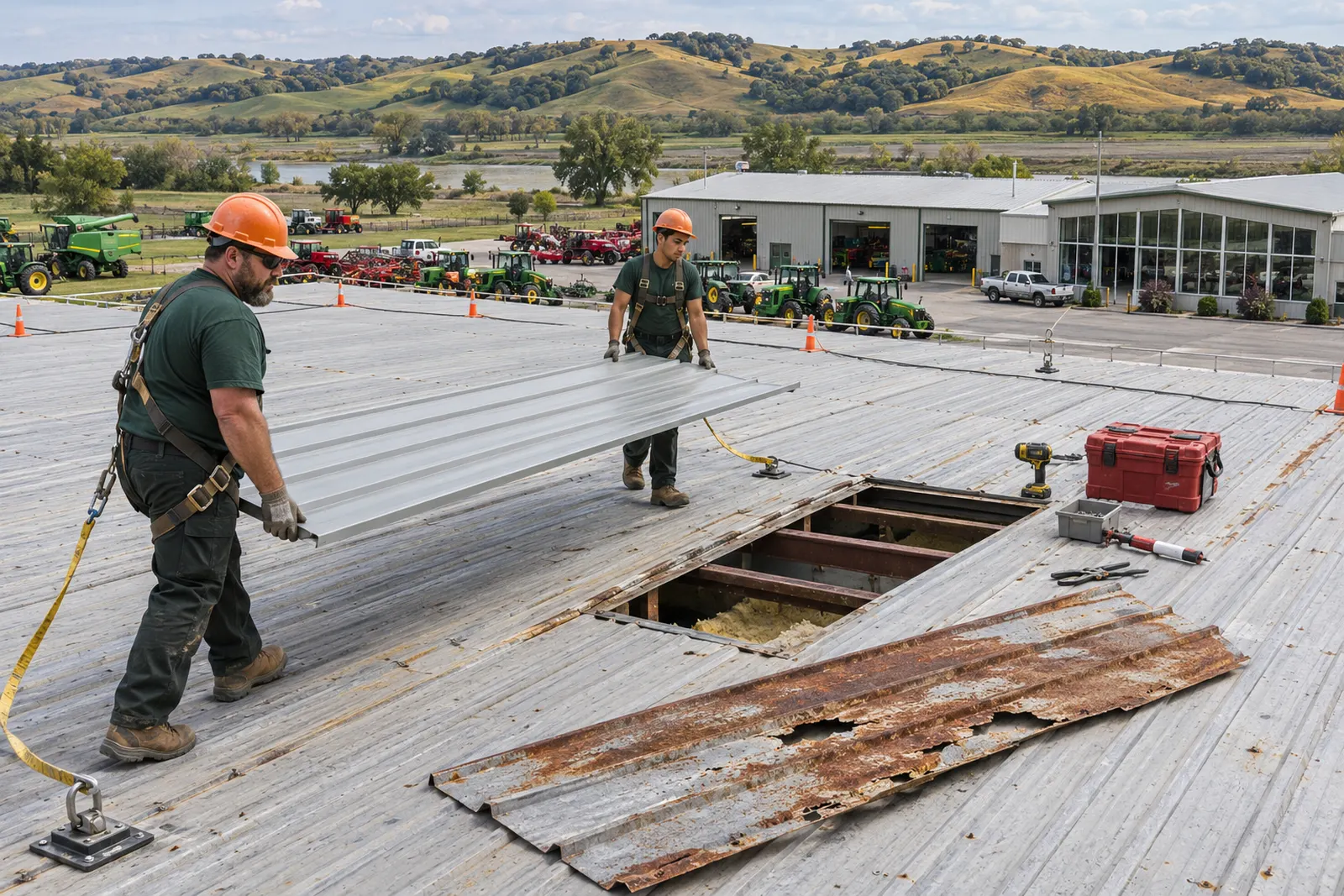 Metal Sections
Many buildings have a metal section beside a membrane one, and the joint between them leaks. We rebuild the transition flashing so both roofs shed water past it.
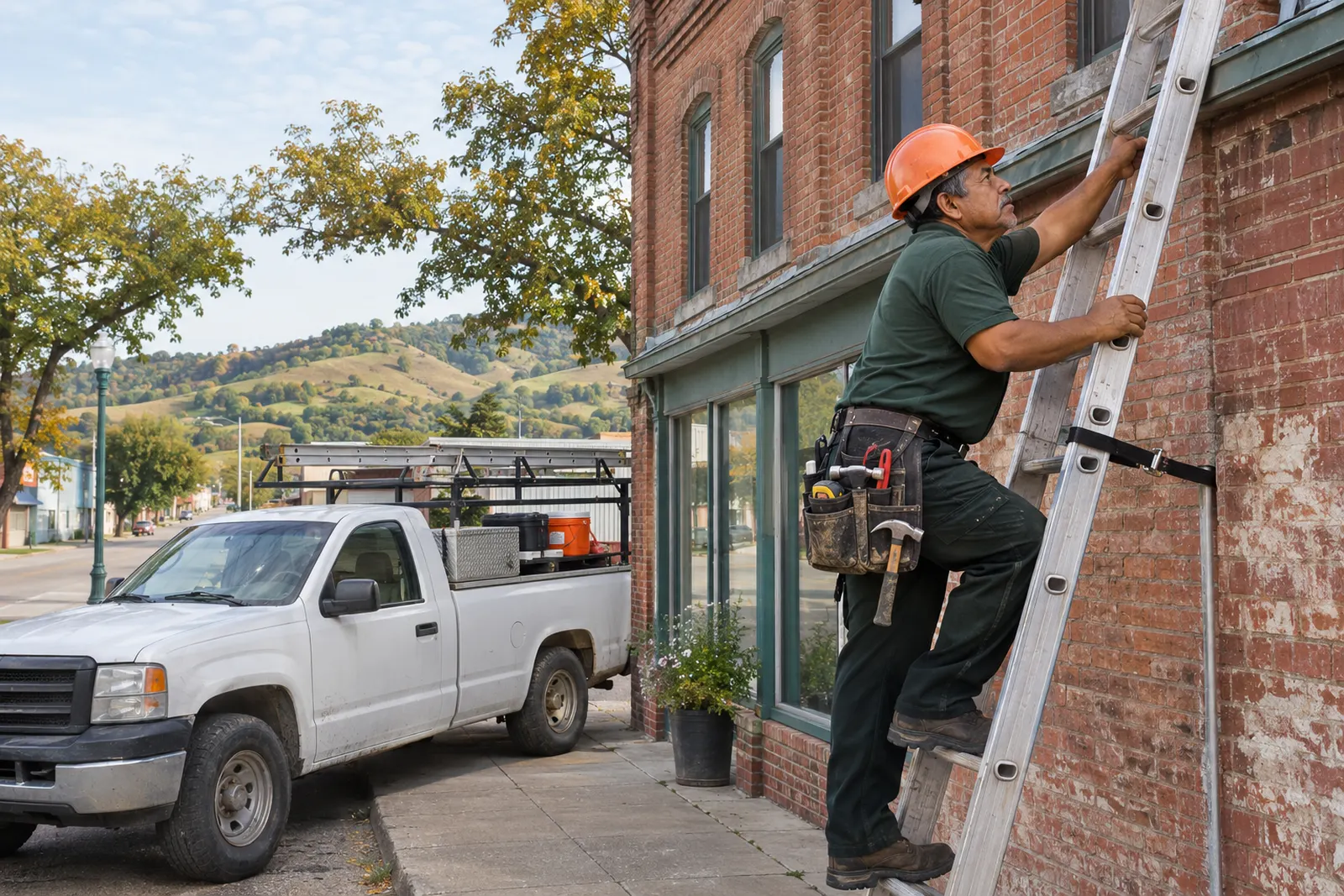 Edges
Edge metal and gutters loosened by years of wind and ice let water behind the fascia. We refasten or replace the edge and reseal it to the roof.
A roof history saves time on every inspection, and even a rough list of dates and drip spots helps. These are the gains it brings.
Dates and weather tied to each drip point straight at the roof areas to check, which shortens every inspection.
Knowing which repairs failed keeps the same mistake from going back on the roof a second time.
A new owner, tenant, or facility manager gets a clear picture of the roof and its repairs on day one.
Dated photos show what was fixed and when, which helps with budgets and insurance questions.
These repairs cover most of what older Logan roofs need.
Trace returning leaks to the true opening instead of patching the drip again, with the record as the map.
See Leak RepairCut out layered patches back to firm membrane and install one matched repair.
See Flat Roof RepairRebuild the joint where a metal roof section meets a membrane section, with flashing that covers both.
See Metal Roof RepairPhotos and a written list of every roof repair for your building file.
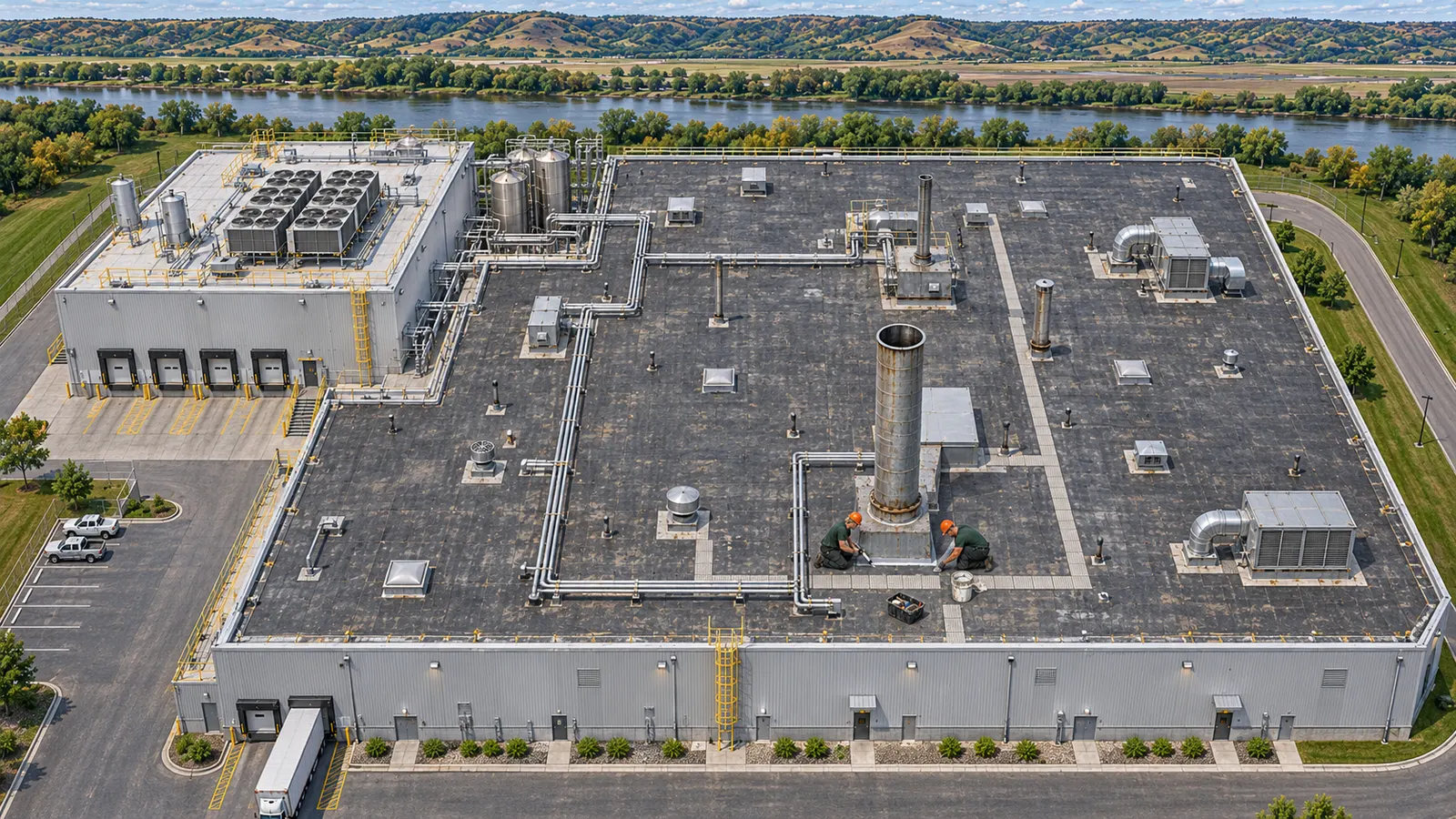
Tell us when it returns and what was done before. We trace it again from inside and above, and price a repair at the real opening, with photos of what we find.
Get A Free EstimateRecord-led repairs follow four steps, and the record grows with each one.
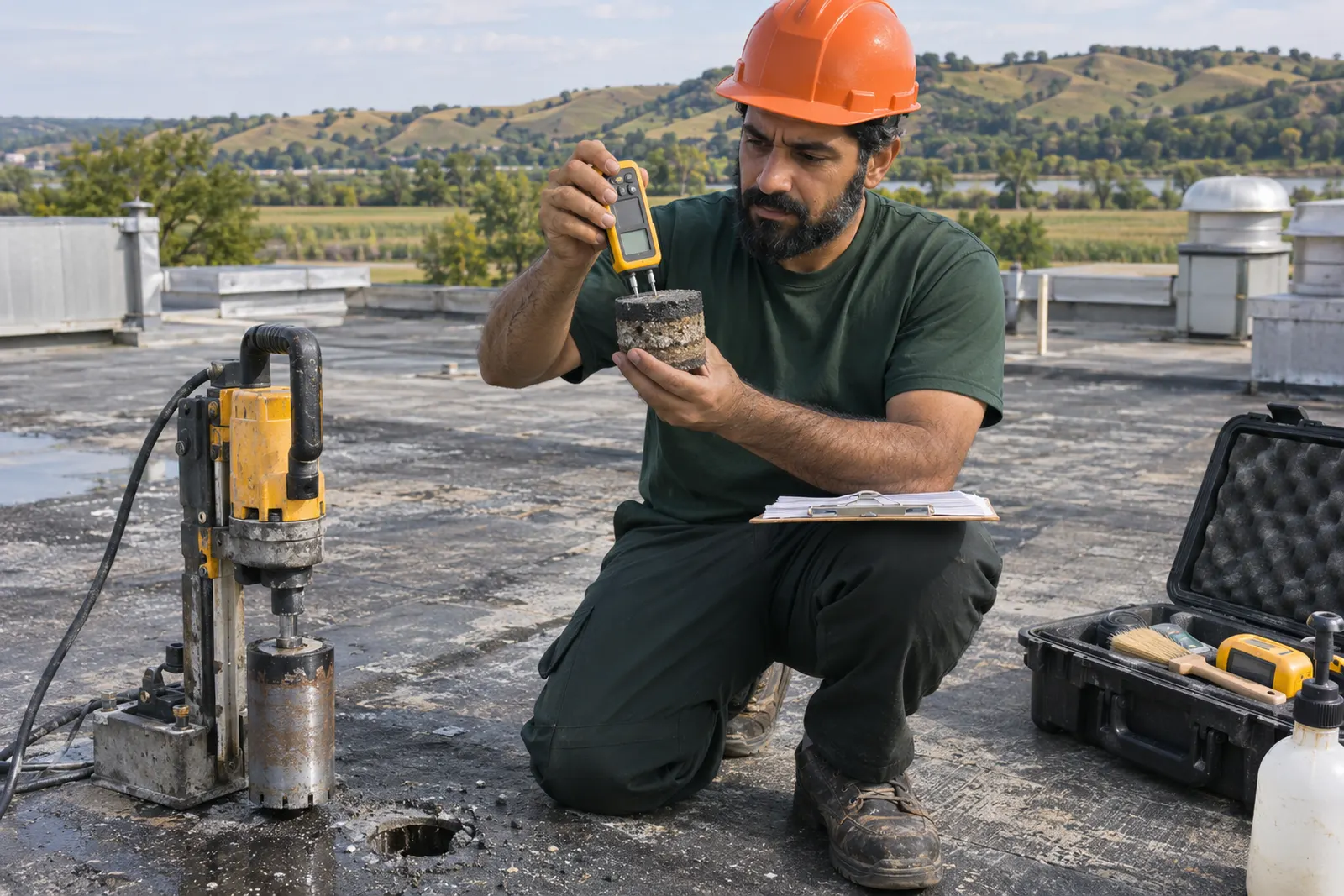
We go over dates, weather, drip locations, and past repairs with you, and mark the roof areas they point to.
Those areas get checked first, with core cuts where old patches cluster, to see whether the insulation under them is wet.
Failed patches come off and matched repairs go in at the true openings, with new flashing at transitions and edges.
Water runs over each repaired opening and transition before the crew leaves, and the result goes into the record with the photos.
You get dated photos and a written list of each repair, ready to add to the building's file.
We also repair commercial roofs in these towns around Logan.
Somewhere else? Call us or send us a message.
Warehouses, dealer shops, and cold storage across the city.
Brick storefronts and offices near the Mills County courthouse.
Low, flat lots west of the Missouri River.
Shops and warehouses timed around freeze and thaw.
Metal shop and farm-service buildings with screw-line leaks.
Answers about leak records, repeat leaks, and repair.
Protect whatever sits under the drip first: move goods, cover equipment, and catch the water. Then write down where and when the drip shows up, and whether wind or heavy rain sets it off. That note lets us trace the leak to its opening on the roof faster.
Most jobs start with the leak record, then a roof inspection focused on the areas it points to. Repairs cover seams, fasteners, flashing at walls and transitions, and any wet insulation, and every repair is photographed for your file.
We take commercial repair work in Logan and the surrounding Harrison County towns, along with Council Bluffs. Call or send the building address and a short note on the leak history, and we set an inspection time.
A contractor should ask when the leak started, where it shows inside, what weather sets it off, and what repairs were tried. Those answers narrow the search before anyone climbs onto the roof.
Use one page or file per building. For each leak, write the date, the weather, where the water showed inside, and what was done. Add photos of the stain and the repair, keep it with your other building records, and share it at each inspection.
Yes. Every past repair, whoever made it, tells us something about the roof. Dates, invoices, and photos from earlier work show which areas have been patched and how often, which points straight at the spots most likely to fail again.
Send the leak history or just tell us where it drips. We trace it, repair it, and document each fix so you can add it to your record.